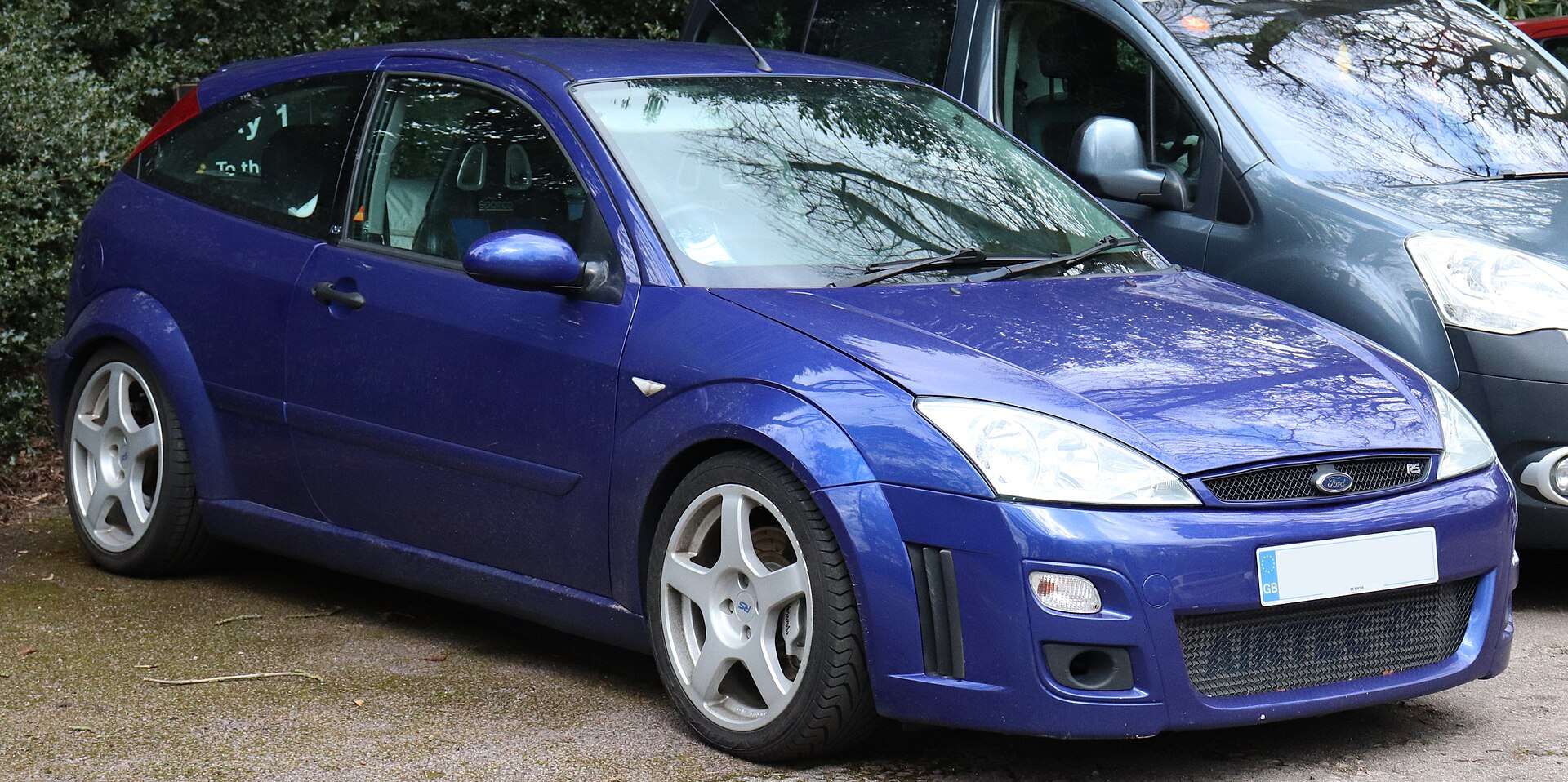
The original Ford Focus RS is now as much a classic-car purchase as a used hot hatch. Its turbocharged 2.0-litre engine, front-wheel-drive chassis and distinctive blue body remain appealing, but condition, identity and the availability of RS-specific parts increasingly determine ownership costs. Buying well means looking beyond low mileage and a numbered plaque to establish what the shell and mechanical components are actually like.
Our buying verdict
Choose a genuine, structurally sound RS with documented servicing, credible timing-belt evidence and a coherent specification. Originality matters if you want a collector-quality car, but it should not outrank corrosion or engine health. A carefully maintained modified example can suit regular use; an unexplained tune and missing factory parts need pricing as uncertainties.

Understand the original Focus RS
This guide covers the 2002–2003 Mk1 RS, not the later five-cylinder Mk2 or four-wheel-drive Mk3. Quaife’s own OEM history documents the Mk1’s 2.0-litre turbo engine, front-wheel drive and factory ATB differential, alongside specialist dampers and wheels. It is a substantially altered performance model rather than an ordinary Focus with an engine map.
| Purchase type | What appeals | What to verify |
|---|---|---|
| Standard road car | Clear original baseline and strong enthusiast appeal. | Factory identity, installed components, complete history and current condition. |
| Mildly modified RS | Potentially useful improvements with regular-road manners. | Reversible changes, correct software and supporting hardware, insurance acceptance. |
| Heavily tuned or track-focused car | Specialist appeal for a buyer who wants that exact specification. | Engine build, cooling, fuelling, drivetrain, brakes and competent ongoing support. |
| Collector-oriented low-mileage example | Originality, provenance and preservation. | Mileage chronology, storage maintenance, paint and the completeness of original parts. |
Check VIN, registration, seller identity and the history of the shell. A plaque, blue paint, seats and badges are not enough to authenticate a genuine RS. Ask an experienced specialist or recognised marque expert to inspect a questionable car before any deposit. Engine and gearbox replacement history should also be recorded clearly.
There is no need to invent several normal trim levels to make a comparison table longer. The useful distinctions are condition, originality, maintenance and modifications. Establish what you want the car to do, then avoid paying a collector premium for hardware you intend to change immediately.
Read invoices in chronological order and ask about long gaps, changes in mileage units and periods off the road. A low-mileage reading with little supporting history is a question to resolve, not a reason to suspend the inspection.
Prices: the asking range is wide
A PistonHeads check on 4 November 2026 found 2003 examples advertised at £19,995 with 91,898 miles, £31,495 with 65,702 miles and £34,980 with 39,160 miles. Another listing described a standard car at £32,995 with 53,227 miles. These are asking prices and unverified seller descriptions, not completed transactions.
Do not interpret that spread as a simple mileage price ladder. Shell condition, repairs, originality, modifications and the credibility of the history may explain more than the odometer. An auction-oriented or unusually cheap listing also needs its sale terms read before it becomes a comparable.
Assess the first-year cost before negotiating. Price belt work, tyres, brakes, cooling repairs and missing original components from inspection findings. A superficially cheaper RS can lose its advantage quickly when a scarce body or interior part is required. Keep a repair reserve after purchase.
Rust, shell condition and RS-specific panels
Inspect in dry daylight and on a lift. Examine sill ends, jacking points, floor sections, rear wheelarch lips and inner structures, suspension mounting areas and the spare-wheel well. Check behind accessible liners and trim for trapped dirt and moisture. A smooth outer arch cannot establish the metal condition inside it.
Look at doors, tailgate edges, glass surrounds and boot seals, then investigate any dampness beneath carpets. A water leak can affect both corrosion and electrical systems. Do not accept a recently dried carpet as evidence that the cause has been repaired.
Compare gaps, paint texture and fasteners from side to side. Inspect the front cooling area, chassis structure and rear quarters for repair evidence. RS bodywork and attachment points should be assessed carefully because correcting an incomplete or poor-quality repair can be expensive.

Ask for photographs of structural work before filler, paint and protective coatings, with invoices naming the repairer and scope. Documented repairs can be acceptable when independently assessed; a generic “restored” label is not enough. Obtain a specialist estimate where a fresh finish makes the underlying work hard to judge.
Inspect bumper fixings, arch liners, splitter, lamps, vents and other RS details. Establish the price and availability of missing pieces before you negotiate. A used part advertised as genuine may need refurbishment or may belong to a different generation, so verify part identity rather than ordering from a photograph.
Engine, turbo and drivetrain checks
Cold start and service history
Ask for a genuine cold start. Check oil and coolant safely before starting, then watch for smoke, persistent misfire, abnormal noises and warnings. Ask how often levels are checked, whether the car uses oil and whether it has ever overheated or required an engine rebuild.
Read servicing invoices for the actual work and specifications. Pumaspeed’s original Mk1 service page distinguishes an interim service, full service, belt job and clutch replacement. That is useful context for reading a stamp that simply says “service”: it may not represent all the work a buyer assumes.
During a complete warm drive, check clean response and consistent boost without aggressive use while cold. Smoke, hesitation, boost surging or abnormal mechanical noise needs diagnosis. Compression, leak-down and cooling-system tests may be justified by symptoms or a major tune; their results should be interpreted by a Ford-aware specialist.
Timing belt and cooling system
The 2.0-litre engine uses a timing belt. Require the date, mileage and scope of the last replacement, and confirm the applicable schedule with a specialist for the actual engine. A general service stamp or a seller saying the previous owner did it is insufficient evidence.
Pumaspeed’s documented belt-service scope includes the tensioner, idler and stretch bolt. Compare the complete appropriate job rather than the cost of a bare belt. Discuss water-pump and accessory-drive condition, relevant seals and the age of associated components. Missing records should be reflected in the immediate maintenance plan.
Inspect radiator, hoses, expansion tank, fans and visible joints for leaks or residue. Check stable temperature through the drive and inspect again afterwards. Repeated topping-up or an overheating history needs an explanation supported by tests, not an assurance that all old performance cars lose a little coolant.
Turbo, fuelling and modifications
Identify the installed turbo, injectors, intake, intercooler or charge-cooling changes, exhaust and engine-management calibration. Match the hardware to tuner invoices and the intended fuel requirement. A map may have changed several times across owners; the latest dyno sheet does not necessarily describe what is fitted now.
Check hoses, clamps, heat shields, wiring and exhaust fitment for a competent installation. Investigate leaks, loose components and improvised connections. A seller promising that poor running “just needs mapping” is offering an unresolved fault.
A higher-output car needs an assessment of cooling, engine condition, clutch, gearbox and brakes together. Do not treat a power figure as a free improvement. Obtain insurance acceptance and confirm who can support the software and parts after the sale.
Clutch, gearbox and Quaife differential
Test all gears cold and warm, including clean engagement, reverse and reasonable loaded operation. Check clutch release and slipping without launch demonstrations. Listen for whine, knocks and vibration, then inspect mounts, driveshafts, seals and leaks on a lift.
Pumaspeed’s Mk1 clutch-service notes specifically discuss the hydraulic release bearing. This reinforces why a clutch quote should identify all included components, not just friction parts. Flywheel, hydraulics, bolts and labour can change the complete bill.
Quaife’s OEM history establishes the original ATB differential fitment. A replacement gearbox may have a different history, so ask what is installed and obtain records. Have a specialist assess handling and noise rather than trying to prove differential function through wheelspin.
Steering, suspension and brakes
Inspect arms, joints, bushes, springs, dampers, top mounts and bearings. The original RS chassis includes specialist components; generic Focus parts are not automatically suitable. Check geometry, wheel condition and tyre wear before accepting pulling or wandering as an inevitable characteristic of the model.

Inspect discs, pads, calipers, hoses and brake pipes. Confirm the installed brake specification and any modifications before ordering parts. Check ABS warning behaviour and brake-fluid history, and investigate uneven braking or recurring vibration with a proper assessment.
A car set up for track use may have excellent components but unsuitable road manners for your needs. Ask about spring rates, alignment, tyre choice and cabin noise. Returning to a comfortable road setup can be a meaningful expense.
Seats, trim and electrical equipment
Inspect seat bolsters, frames, runners, steering wheel, pedals, carpets and door trim. RS-specific interior parts can be harder to replace than a normal service component. Confirm that any original pieces supplied separately are complete and serviceable.
Test windows, mirrors, locking, lights, heated equipment where fitted, audio and air conditioning. Check all keys and inspect alarm or stereo modifications. Dampness and amateur wiring deserve attention before an electrical fault is dismissed as a cheap switch.
Compare cabin wear with mileage and maintenance, remembering that trim can be replaced. A tidy cabin is a useful observation, not an authentication method. Check that seat mounting and any aftermarket harness or safety equipment is appropriate and competently fitted.
Maintenance and useful parts allowances
Plan the first service from the actual condition and records, using correct Ford specifications. Parts searches below deliberately name the Mk1 2.0 so they are less likely to mix in Mk2 five-cylinder or Mk3 components. Every listing still needs part-number and fitment checks.
These are editorial UK parts-only budgeting allowances, not live offers or fitted quotes. Brand, VAT treatment, exchange surcharges and availability can change the total. Obtain a written fitted quote and check part numbers against your VIN, engine and modifications.
Affiliate disclosure: we may earn a commission from qualifying eBay purchases, at no extra cost to you. The links open vehicle-specific searches; they do not certify the suitability or quality of individual listings. Check seller, fitment, warranty and returns.
| Maintenance item | Parts allowance | What to check |
|---|---|---|
| Oil and filter service parts | £50–£100 | Confirm the appropriate Ford oil specification and quantity. |
| Timing-belt service components | £100–£230 | Compare tensioner, idler and required fasteners; fitting adds cost. |
| Accessory-drive components | £40–£140 | Check complete drive condition and correct application. |
| Spark plugs | £35–£85 | Match engine and documented tune; avoid generic heat-range assumptions. |
| Alternator | £130–£300 | Verify output, fitment and exchange terms after diagnosis. |
| Starter motor | £90–£220 | Check battery, cables and earth connections first. |
| Water pump | £40–£110 | Confirm quality, application and seals; coolant and labour are additional. |
| Radiator | £120–£280 | Verify the actual RS cooling arrangement and mountings. |
| Clutch kit | £250–£500 | Confirm release bearing, flywheel and hydraulic scope separately. |
| Front discs and pads | £170–£360 | Match RS hardware or identify the fitted conversion. |
| Suspension components | £40–£180 per component | Correct RS application, fitting and geometry matter. |
Hidden ownership costs
Scarce original parts: body panels, trim, seats, wheels and model-specific chassis components can cost far more than normal Focus service items. Check availability before agreeing to correct a missing or damaged part after purchase.
Correct metalwork: inner arches, sills and mounting repairs need proper structure, paint and protection. A cheap visible patch may leave the larger problem in place. Obtain a body specialist’s opinion where deterioration is uncertain.
Returning to standard: restoring intake, exhaust, suspension, software and wheels can be a multi-part project. Retained components have value only if correct and usable. Do not pay an originality premium for a car that requires that work.
Tyres and geometry: the car’s reputation rests heavily on its chassis. A matching quality tyre set, straight wheels, sound joints and appropriate alignment should be in the first-year plan, not postponed behind appearance upgrades.
Insurance, security and use: quote the actual car, storage, mileage and modifications. Ask about security and valuation requirements before buying. Current tax and fuel costs should be calculated for the individual registration and your intended use.
Stored-car recommissioning: belts, rubber, fluids and tyres age without mileage. Inspect a preserved example for seized components and deferred time-based work. Keep a reserve for diagnosis and parts lead times as well as ordinary servicing.

Eight checks before you buy
- Authenticate shell, VIN, registration and replacement-engine or gearbox history.
- Read chronological invoices and identify current software and hardware.
- Verify timing-belt date, mileage and complete component scope.
- Inspect sills, arches, floor, mounting points and repairs on a lift.
- Assess cold start, warm boost behaviour, oil and cooling-system health.
- Test clutch, gearbox, braking, steering and the condition of tyres and suspension.
- Inventory missing or included original RS parts and test all electrical equipment.
- Obtain independent estimates, insurance acceptance and a repair reserve before payment.
Frequently asked questions
Is the Mk1 Focus RS four-wheel drive?
No. Quaife documents its front-wheel-drive layout and factory ATB differential. The later Mk3 is a different model.
Does the Mk1 use the Mk2 timing kit?
No. This guide covers the 2.0-litre four-cylinder. Confirm the correct belt, tensioner, idler and fasteners using the actual engine and specialist advice.
Does a numbered plaque prove authenticity?
No. Decorative parts can move between cars. Verify shell identity, records and mechanical specification with an experienced specialist.
Should I buy a modified car?
Only if its complete specification, maintenance, support and insurance are clear. A tuned example may suit regular use, but unresolved running issues and missing originals need realistic pricing.
What matters more than a low odometer reading?
Sound structure, credible history and current mechanical condition. Storage still ages belts, tyres, hoses and fluids, so low mileage does not remove the need for recommissioning checks.
Research and sources
Original supplier records establish the differential fitment and workshop service scope. They do not provide a representative failure rate or a current fitted-cost guarantee. The market sample consists of dated advertisements, not cars we have inspected.
- Quaife OEM history: 2002–2003 Mk1 Focus RS: original front-wheel-drive ATB fitment and model context.
- Pumaspeed: Mk1 Focus RS workshop service descriptions: full versus interim service, belt-job components and hydraulic release-bearing context. Historical page prices are not used as current quotations.
- PistonHeads 2003 Focus RS listings: dated asking-price sample, subject to seller accuracy and availability.