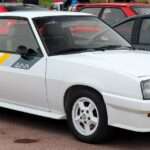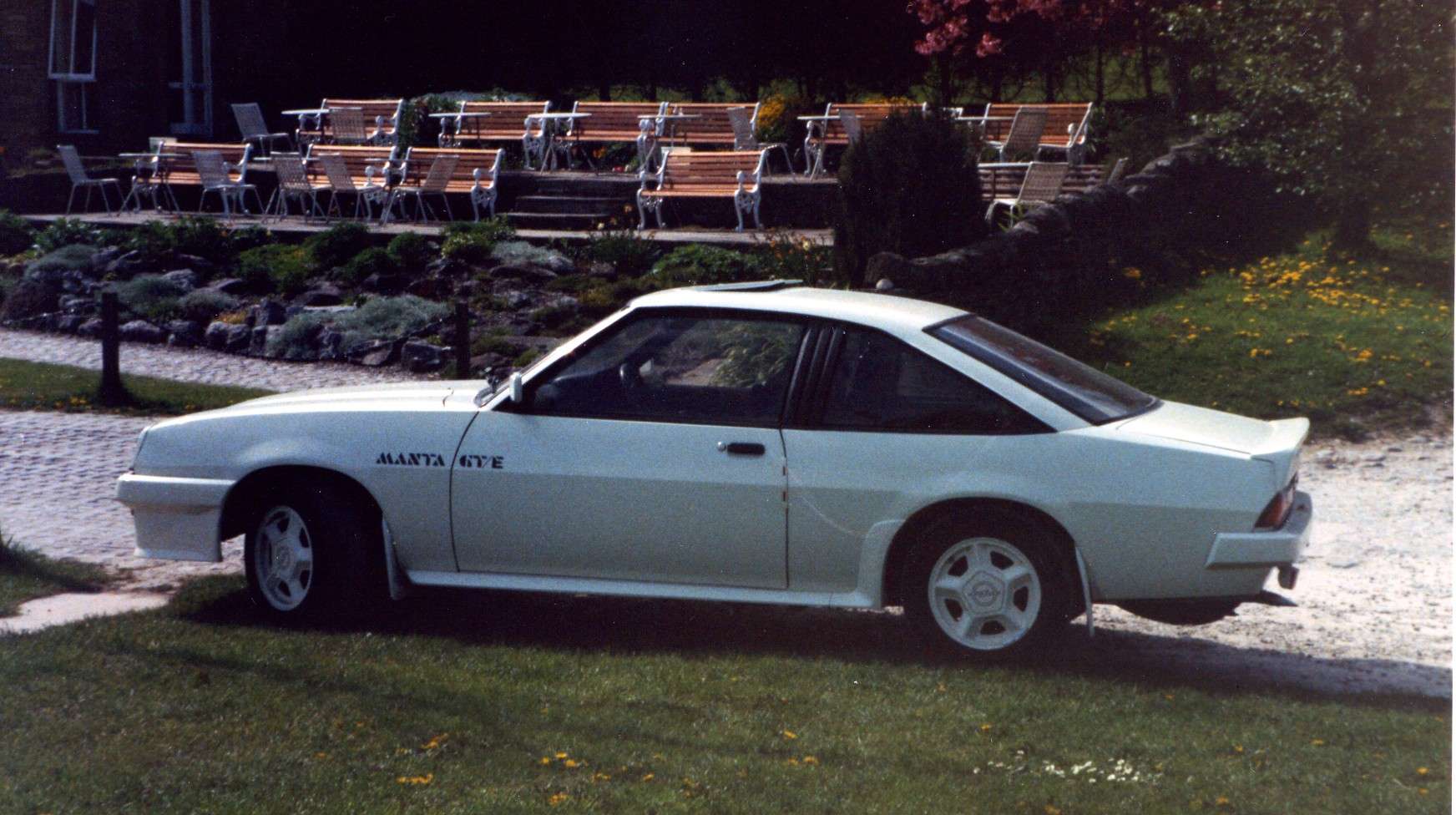
The Opel Manta i200 is one of the most desirable factory-approved developments of the long-lived Manta B. Created with Irmscher and connected to Opel’s Group B rally programme, it combined the familiar rear-wheel-drive coupé with more power, distinctive trim and genuine homologation significance. Crucially, the i200 was officially offered in Britain; the more powerful i240 and six-cylinder i300 were continental-market or special-order cars rather than normal UK catalogue models.
Quick answer: an i200 should be bought on identity, structural condition and completeness. Stripes, twin headlamps and white wheels are easily copied, so documentation and correct mechanical and interior details matter more than appearance alone.
What is the Opel Manta i200?
The i200 was developed from the fuel-injected Manta GT/E during the early 1980s. Irmscher, Opel’s long-standing tuning and styling partner, supplied the modifications needed to give the car a stronger road presence and support its competition role. The model helped homologate equipment for rallying while providing customers with a usable road car.
Most i200s used the 1,979cc cam-in-head four-cylinder engine. Irmscher changes, including a different camshaft and revised tuning, raised quoted output from the standard GT/E’s roughly 110PS to about 125PS. Drive remained through a five-speed manual gearbox to the rear wheels.
UK-market significance
The i200 is particularly relevant to British enthusiasts because it was the Irmscher special officially sold here. Period UK cars are associated with the white Rothmans-inspired colour scheme, white wheels, contrasting blue and red graphics, twin round headlamps and Opel-logo interior fabric. Not every genuine i200 left the factory looking identical, however, and surviving cars may have received replacement panels, graphics or trim.
The i240 used a larger 2.4-litre engine and the i300 a six-cylinder conversion. They are fascinating cars, but they should not be described as ordinary UK-market i200 variants. A right-hand-drive i240 may be a later conversion, an import or a specially assembled car, so its history must be considered separately.
Opel Manta i200 specifications
| Base model | Opel Manta B GT/E |
|---|---|
| Engine | 1,979cc fuel-injected CIH inline four |
| Power | Approximately 125PS in i200 tune |
| Transmission | Five-speed manual |
| Drive | Rear-wheel drive |
| Quoted performance | Approximately 0–62mph in the nine-second range and around 120mph, depending on source and specification |
| UK status | Officially marketed Irmscher-developed special |
Period figures vary, and many cars have been modified. Confirm engine number, cylinder head, camshaft, injection components, exhaust and gearbox before assuming a car still matches original specification.
How to identify a genuine i200
No single visual feature proves identity. Twin headlamps, spoilers, stripes and white wheels have been fitted to many ordinary Mantas. Begin with the VIN and registration history, then seek original invoices, dealer paperwork, Irmscher documentation, build details and a continuous ownership record.
Inspect the interior for the correct Opel-logo cloth, steering wheel, instruments and trim. Check the exterior package, wheel type and dimensions, spoilers and graphics against period photographs of the exact market version. Engine-bay details should support the claimed tune. A recognised Manta club or marque specialist can be invaluable before a high-value purchase.
Common problems
Rust in the body shell
Corrosion is the principal threat. Inspect the front chassis rails, crossmember, inner wings, suspension mounts, bulkhead, sills, jacking points, floorpans, rear arches, rear spring mounts, boot floor and screen surrounds. Check behind body kits and spoilers where moisture can hide. A genuine identity does not compensate for a dangerously weak shell.
Previous rally-style modifications
Many Mantas have been modified for competition looks or performance. Examine roll-cage mounting points, cut panels, enlarged transmission tunnels, altered suspension pick-ups and non-standard fuel systems. Modifications can be excellent when engineered properly, but they should be documented and reflected in the description and insurance.
CIH engine and injection
Start the engine cold. Listen for chain noise, check oil pressure, look for smoke and confirm a steady idle. Bosch injection faults can result from air leaks, aged hoses, dirty fuel systems, poor electrical connections or mismatched parts. Check the cooling system carefully and verify that the car does not overheat when stationary.
Gearbox, axle and driveline
Test synchromesh, clutch action and gearbox bearings. Listen for propshaft vibration, worn universal joints and differential whine. Hard use, engine conversions and wider tyres can increase the load on ageing components.
Suspension, brakes and steering
Inspect bushes, ball joints, dampers, springs, steering joints, calipers and brake pipes. A Manta should feel predictable and balanced. Wandering, harshness or uneven braking may indicate tired parts or poorly matched upgrades.
Rare trim and wheels
Correct seats, cloth, headlamp assemblies, spoilers, wheels, decals and badges can be expensive to replace. Reproduction graphics may be necessary after restoration, but they should not be used to manufacture a false history. Photograph and catalogue what is present before dismantling a complete car.
Buying checklist
- Verify the VIN and UK registration history.
- Ask for original dealer or Irmscher documentation.
- Have a Manta specialist assess authenticity.
- Inspect the shell on a lift, including behind body-kit sections.
- Confirm the engine and injection equipment match the claim.
- Test gearbox, axle, steering and brakes when warm.
- Check the completeness of i200-specific interior and exterior parts.
- Ensure all modifications are declared and insurable.
i200, i240 or Manta 400?
The i200 is a tuned two-litre special with a genuine UK-market story. The i240 is a more powerful 2.4-litre Irmscher model but was not a normal official UK offering. The Manta 400 is a far more specialised homologation car with a different 16-valve engine and much greater value. None should be identified solely by bodywork or decals.
Is an Opel Manta i200 worth buying?
Yes, provided the car’s identity and condition withstand scrutiny. It gives the Manta’s practical coupé shape, simple rear-drive chassis and strong club support an extra layer of rarity and motorsport history. Because replicas are easy to create and genuine trim is hard to find, a well-documented car is worth paying more for than a visually convincing mystery.
Frequently asked questions
Was the Manta i200 officially sold in the UK?
Yes. The i200 was the Irmscher-developed special officially marketed in Britain.
How much power does an i200 have?
Period sources generally quote about 125PS from the tuned 2.0-litre injected engine.
Is every white Manta with Rothmans-style stripes an i200?
No. The appearance has been widely replicated. Verify the car through documentation, identity and specialist inspection.
Sources and further reading
- Hagerty UK: Opel Manta buyer’s guide
- Vauxhall Cavalier and Chevette Club: Opel variants
- UK sales-brochure archive
Rare derivatives require physical inspection and supporting paperwork. Do not rely on decals, badges or a seller’s description alone.