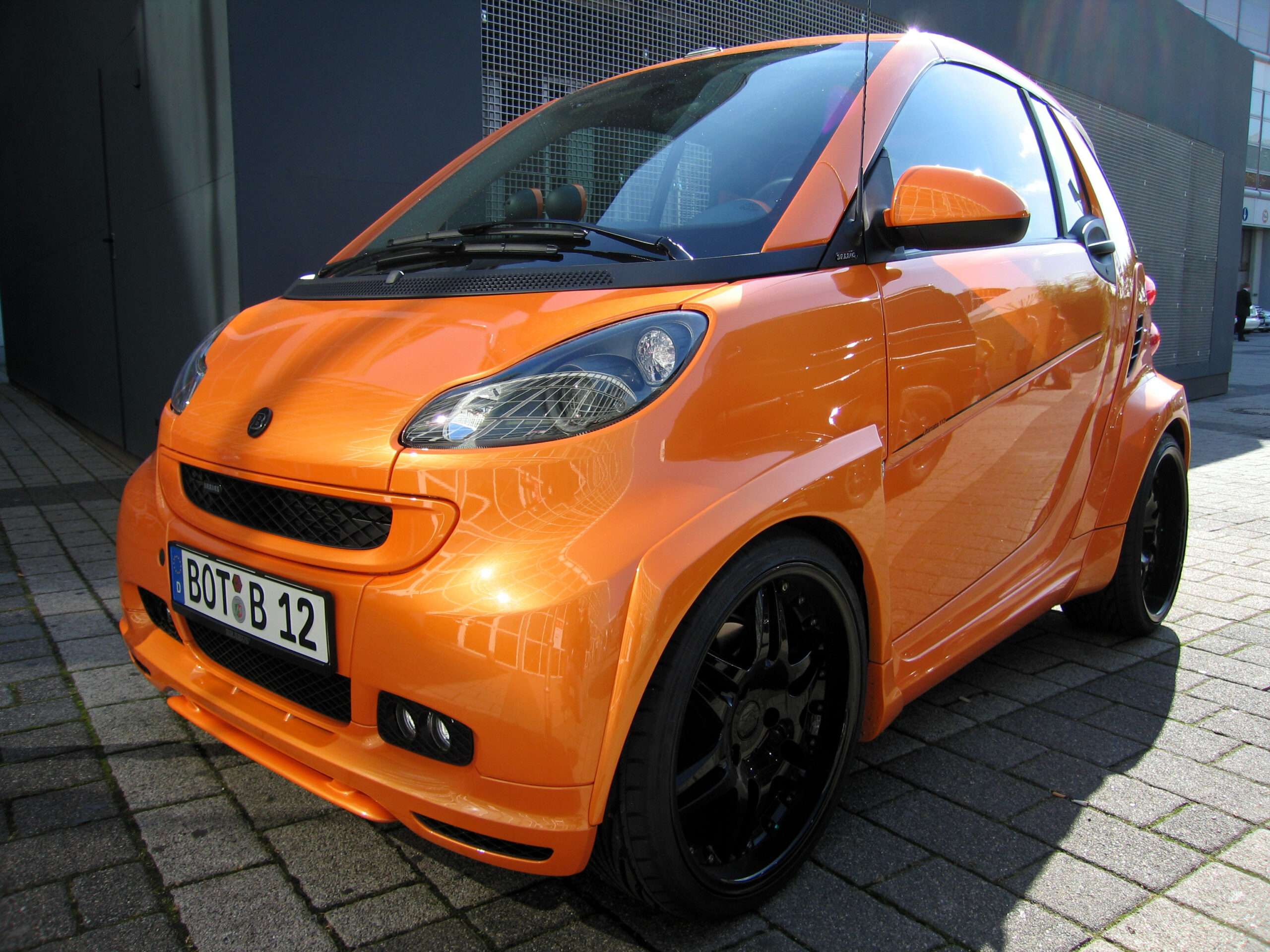
The second-generation Smart Fortwo Brabus, known by its 451 model code, turned the tiny two-seater into a credible pocket performance car. It retained the city-friendly dimensions and rear-engine layout but added a stronger Mitsubishi-derived 1.0-litre turbo engine, firmer suspension, larger wheels and an unmistakably more purposeful appearance. In Britain it remains rare enough to feel special, yet it is usable every day if bought carefully.
Smart Fortwo Brabus 451 UK history
The 451-generation Fortwo arrived in 2007, replacing the original 450. The Brabus version followed with 98PS from its 999cc three-cylinder turbo engine, later rising to about 102PS in updated cars. UK buyers could choose Coupé and Cabrio forms, while higher-spec Xclusive models brought additional exterior and cabin details. The car used a five-speed automated manual gearbox rather than a conventional automatic.
Brabus changes included wider wheels and tyres, lowered suspension, twin exhaust outlets, revised bumpers and branded interior trim. Later cars received detail updates, so specification should be checked against the VIN and original sales documentation. Replica wheels, badges and body kits mean appearance alone does not prove that a car is a genuine factory Brabus.
Performance and driving experience
With roughly 98 to 102PS in a car weighing little more than 800kg, the 451 Brabus is much quicker than an ordinary Fortwo. Strong mid-range boost makes it lively in town and entertaining on short cross-country journeys. The five-speed transmission is smoother than the earlier six-speed unit, although it still pauses between changes. Lifting the accelerator slightly during an upshift helps.
The short wheelbase, firm springs and low-profile tyres give crisp responses but also a busy ride. Steering is light, grip is strong and the rear-engine layout gives the Brabus a distinctive balance. Stability control should intervene unobtrusively; warning lamps or inconsistent behaviour require diagnosis.
Smart Fortwo Brabus 451 common problems
Turbo engine and boost system
The 1.0 turbo is generally tougher than the original 450 engine, but it still depends on correct oil, regular servicing and sensible warm-up and cool-down habits. Listen for timing-chain rattle, check for oil leaks and look for smoke from the exhaust. Split boost hoses, wastegate or actuator faults and tired ignition components can cause hesitation or reduced power.
Automated gearbox and clutch
Slow shifts are normal; severe judder, clutch slip, missed gears or warning symbols are not. The clutch actuator may need cleaning, adjustment or replacement, while clutch wear is accelerated by repeated creeping in traffic. Test the car from cold and hot in both automatic and manual modes. A specialist diagnostic scan can reveal stored transmission faults and clutch adaptation values.
Suspension, springs and steering joints
Broken front springs, worn drop links, ball joints and bushes are familiar 451 issues. Listen for knocks over uneven roads and check that the steering self-centres without clunks. Brabus suspension is firm by design, but it should not crash or wander. Uneven tyre wear can indicate alignment trouble or bent wheels.
Brabus wheels and tyres
The large alloy wheels are vulnerable to kerb damage, corrosion and distortion. Replacement originals are expensive, so inspect inner rims as well as visible faces. Confirm that tyres are the correct matching sizes and reputable brands. A car on mismatched or budget tyres may ride poorly and can confuse the stability system.
Water leaks and electrical equipment
Inspect carpets and luggage areas for damp, and test the air conditioning, central locking, windows, instruments and roof. Cabrio mechanisms should run smoothly through a complete cycle. Battery voltage matters on these cars: a weak battery can generate multiple warning messages that mimic more serious faults.
How to identify a good example
- Check the VIN and factory specification to confirm genuine Brabus identity.
- Look for continuous servicing with the correct oil and documented gearbox work.
- Start from cold and listen for chain noise, misfires or exhaust smoke.
- Drive in every transmission mode and check for clutch judder or warning symbols.
- Inspect all four wheels, tyres, springs and suspension joints.
- Test the Cabrio roof where fitted and check the cabin for water ingress.
- Prefer an unmodified car, or one with fully documented high-quality upgrades.
Running costs and parts
Routine servicing is manageable and Smart specialists understand the 451 well. Costs rise when Brabus-specific trim, wheels, exhaust parts or body panels are needed. Insurance can also be higher than for ordinary Fortwos. Because values vary widely, paying more for a straight, original car with invoices is usually wiser than rescuing a neglected example.
Verdict
The Smart Fortwo Brabus 451 combines genuine performance character with a footprint smaller than most city cars. Its transmission and ride will not suit everyone, but a good one is quick, distinctive and surprisingly practical for two. Condition, originality and diagnostic evidence matter far more than a low asking price.
Research sources included Smart UK legacy information, period 451 sales literature and independent UK repair and ownership guidance. Featured image: LSDSL, Wikimedia Commons, CC BY-SA 2.0 Germany.