UNUSUAL CARS MODEL GUIDE
Before the Impreza Turbo transformed Subaru’s British image, the first-generation Legacy 4 Cam Turbo supplied the same essential ingredients in a larger and more discreet body. Offered here in saloon and estate form from 1991, it combined a 2.0-litre intercooled boxer engine with permanent four-wheel drive and genuine sports-car pace.
Quick answer: the UK-market Legacy 4 Cam Turbo used a 1,994cc turbocharged flat-four producing approximately 200PS, a five-speed manual gearbox and full-time four-wheel drive. It was sold until the first-generation Legacy was replaced in 1994 and is now one of the rarest official UK performance Subarus.
The performance Subaru before the Impreza
The Legacy arrived in Britain in 1989 as Subaru’s new large saloon and estate. Its clean styling and frameless doors concealed unusually sophisticated engineering: a newly developed EJ-series boxer engine, independent suspension and an all-wheel-drive platform created with rally competition in mind.
The 4 Cam Turbo joined the UK range in 1991. Its name described the twin-cam cylinder heads rather than the number of camshafts across the whole engine. In contemporary terms the car was exceptionally quick, yet there were no huge spoilers or loud graphics. That combination of pace, security and anonymity became a Subaru speciality.
Engine, transmission and performance
The European export version of the EJ20 turbo was rated at about 200PS with roughly 260Nm of torque. A five-speed manual gearbox sent power permanently to all four wheels through a centre differential, while anti-lock brakes were standard on the turbo. UK literature offered both four-door saloon and practical estate bodies.
| Specification | UK Legacy 4 Cam Turbo |
|---|---|
| Engine | 1,994cc intercooled turbocharged flat-four |
| Power | Approximately 200PS / 197bhp |
| Torque | Approximately 260Nm |
| Gearbox | Five-speed manual |
| Drive | Permanent four-wheel drive |
| 0–60mph | Approximately seven seconds |
Figures can be confused with Japanese-market RS and GT models, which used different outputs and equipment. A UK 4 Cam Turbo should therefore be identified from its chassis details and period documentation rather than from imported badges.
Rally connection
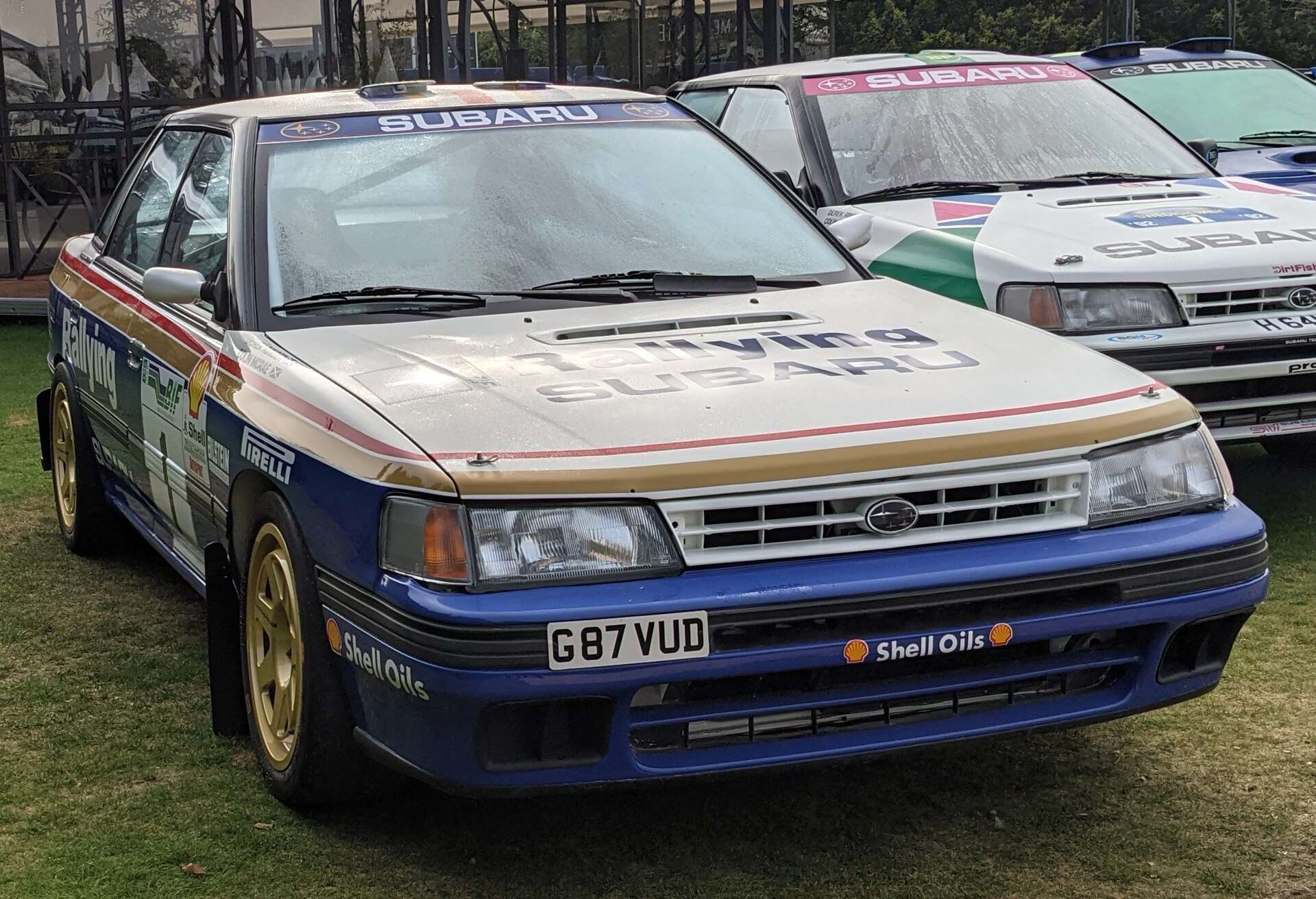
Subaru used the Legacy RS as its first serious World Rally Championship weapon with Prodrive. The competition programme did not immediately deliver championships, but it established the engineering knowledge, team relationship and boxer-AWD identity later carried into the Impreza. Colin McRae’s 1993 Rally New Zealand victory gave the Legacy its defining WRC success shortly before the smaller car took over.
What is it like to drive?
The Legacy feels more mature and stable than an early Impreza Turbo. There is strong mid-range acceleration, plenty of traction and a supple ride that suits difficult British roads. The controls are heavier and the body larger than the later rally icon, but the car remains direct and confidence-inspiring.
An estate adds substantial practicality without losing the model’s understated appeal. Either body makes a convincing long-distance classic, provided the owner accepts early-1990s fuel consumption and the challenge of sourcing rare trim.
Love cars you don’t see every day?
Get forgotten cars, surprising motoring stories and the most interesting finds from Unusual Cars by email.
Free to join. No spam. Unsubscribe whenever you like. See our privacy policy.
Buying guide: what to check
Identity and originality
Confirm that the car is an original official UK 4 Cam Turbo rather than a naturally aspirated shell, later conversion or Japanese import. Inspect the VIN, registration history, engine number and old invoices. Original wheels, interior trim, lamps and exterior mouldings add considerable value because replacements are difficult to find.
Engine and turbocharger
Demand evidence of regular oil changes and correct cambelt maintenance. Start the engine cold, watch for smoke and listen for bottom-end knock. Hesitation can come from ageing airflow meters, split hoses, ignition components or poorly maintained boost plumbing. Any modified boost control should be treated cautiously unless supported by specialist records.
Cooling system
Check the radiator, hoses, header tank and water pump for leaks or staining. The temperature should remain steady in traffic. Repeated overheating can damage head gaskets and cylinder heads, so unexplained coolant loss is a reason to walk away.
Gearbox and four-wheel drive
Test every gear from cold. Worn synchro can be disguised once the oil warms, while clutch slip may appear only under full boost. Listen for differential whine, inspect driveshaft boots and ensure all four tyres match in size and wear.
Body and suspension
Despite the Legacy’s period reputation for durability, age now makes corrosion a serious concern. Inspect sills, rear arches, floor seams, suspension turrets, subframes and the area around the windscreen. Check self-levelling or replacement rear suspension on estates and budget for tired bushes and dampers.
Which one should you buy?
Buy the most complete, least modified example with the strongest history. A saloon is closest to the rally narrative; an estate is the more distinctive all-round classic. Mechanical upgrades are not automatically harmful, but originality and careful specialist maintenance matter more than headline power.
Verdict
The Legacy 4 Cam Turbo deserves recognition as the car that prepared British buyers for Subaru’s 1990s performance revolution. It is fast, technically interesting, discreet and far rarer than the Impreza it helped create.
Research sources
- Subaru UK and period Legacy 4WD Turbo sales literature
- RAC Drive, Subaru Legacy 1989–1998 used-car review
- AA contemporary Subaru Legacy technical reports
- Subaru and Prodrive competition-history material