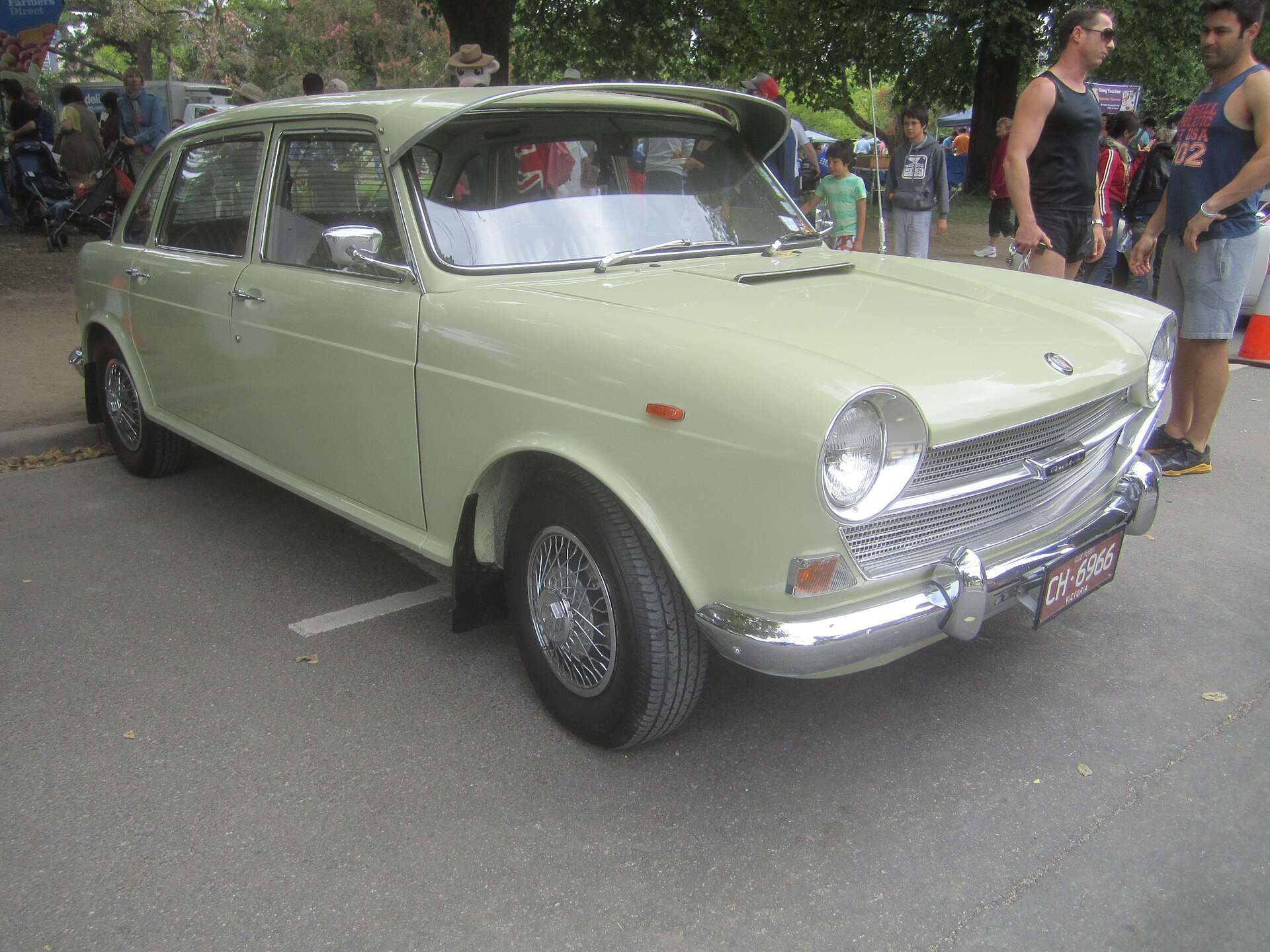
The Austin and Morris 1800/2200 “Landcrab” turned Alec Issigonis’s front-wheel-drive thinking into a large family saloon. Wider than many rivals, exceptionally roomy and famous for long-distance rally toughness, ADO17 was far more accomplished than its unconventional proportions suggested.
At a glance
- UK sales: 1964–1975
- Body: four-door saloon
- Engines: 1.8-litre B-Series four; 2.2-litre E-Series six from 1972
- Drive: front-wheel drive with transverse engine
- Suspension: interconnected Hydrolastic
- Related UK models: Morris 1800/2200, Wolseley 18/85 and Six
Issigonis goes large
ADO17 followed the Mini and ADO16 1100/1300 in applying Alec Issigonis’s packaging ideas to a larger class. Launched as the Austin 1800 in October 1964, it placed the B-Series engine transversely over the front wheels, used a gearbox in the sump and pushed the wheels towards the corners. The result was a car shorter than some family rivals outside yet remarkably generous inside.
Pininfarina assisted with the body, although engineering priorities dictated its broad stance and long wheelbase. The bodyshell was exceptionally stiff and Hydrolastic suspension linked the front and rear wheels on each side. The 1800 won the 1965 European Car of the Year award, but conservative buyers often preferred the more familiar Ford Corsair, Vauxhall Victor or Rootes saloons.

Why “Landcrab”?
The nickname is usually linked to the car’s wide, low stance and the sideways attitude adopted by works rally cars. Whatever its precise origin, it became affectionate shorthand. Paddy Hopkirk and Tony Nash finished second on the gruelling 1968 London–Sydney Marathon, while further cars tackled the 1970 London–Mexico World Cup Rally. Their performances established a durability that showroom sales had not fully recognised.
Marks, badges and the 2200
The Morris 1800 joined the range in 1966 and the more luxurious Wolseley 18/85 followed. The 1968 Mk2 brought revised styling, improved details and the twin-carburettor 1800 S. In 1972 the Mk3 appeared alongside the 2227cc E-Series six-cylinder Austin and Morris 2200 and Wolseley Six. Production ended in 1975 when the wedge-shaped 18-22 Series arrived.
UK specifications
| Version | Engine | Typical output | Notes |
|---|---|---|---|
| 1800 | 1798cc B-Series four | About 80bhp | Single-carburettor core model |
| 1800 S | 1798cc twin-carb B-Series | About 96bhp | Stronger performance and rally association |
| 2200 | 2227cc E-Series six | About 110bhp | Smoother and quieter Mk3 flagship |

What is it like to drive?
A healthy Landcrab feels unlike a conventional 1960s saloon. The steering is weighty at parking speeds but accurate on the move, the wide track gives reassuring stability and Hydrolastic suspension absorbs poor surfaces with impressive composure. The four-cylinder engine is torquey rather than sporting. The 1800 S adds useful urge, while the six-cylinder 2200 is the relaxed long-distance choice.
Buying guide
- Structure: inspect the sills, floors, jacking points, front and rear subframe mountings, wheelarches, door bottoms, screen surrounds and rear valance. The strong shell can hide serious corrosion.
- Hydrolastic: check that the car sits level and rides softly without fluid leaks. A harsh ride may mean depleted displacers, while corroded pipes require careful replacement.
- B-Series: listen for timing-chain and bottom-end noise, watch for oil leaks and check for overheating. Parts support is generally good.
- E-Series six: cooling-system condition is vital. Confirm smooth running and budget carefully for rarer six-cylinder components.
- Transmission: worn synchromesh, bearing rumble and differential noise are expensive because the gearbox shares the engine casing and oil.
- Trim: body panels, lamps and cabin fittings are scarcer than routine service parts. Club support is especially valuable.

Why it matters
The Landcrab was one of Britain’s most ambitious family cars: technically adventurous, structurally tough and successful in events that tested machinery to destruction. It also explains the Princess that followed and remains one of the clearest expressions of Issigonis’s belief that passenger space should dictate a car’s engineering.
Sources and further reading
- Landcrab Owners’ Club: model background
- Lancaster Insurance: pre-production Austin 1800 history
- British Motor Museum Archive
Image sources and licences
Images are from Wikimedia Commons: 1966 Austin 1800 by Sicnag, CC BY 2.0, Austin 1800 by kitmasterbloke, CC BY 2.0 and rear view by kitmasterbloke, CC BY 2.0.
Enjoy unusual cars?
Get new histories and buying guides by email.