UNUSUAL CARS MODEL GUIDE
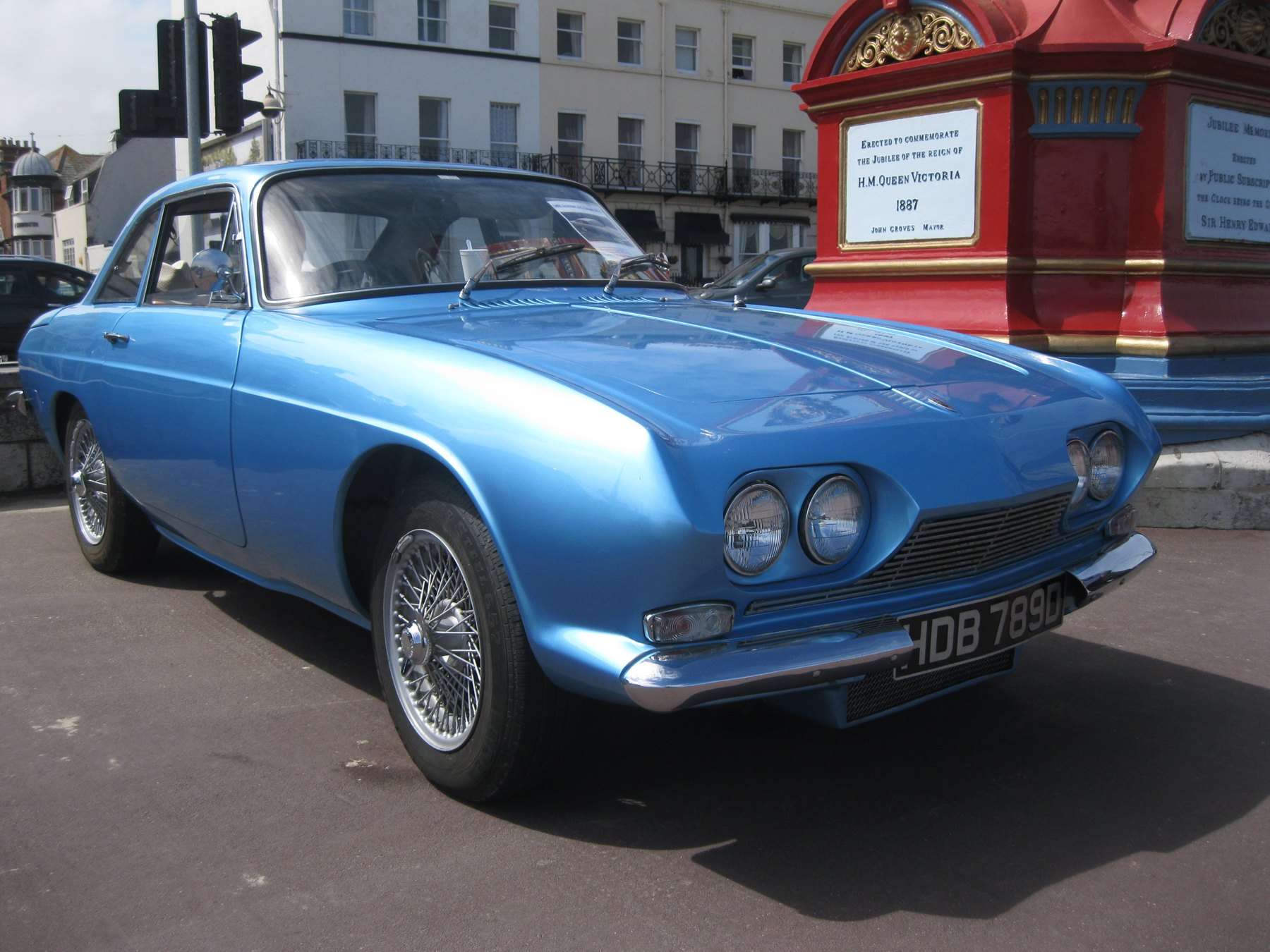
The Reliant Scimitar GT SE4 was the compact glassfibre coupé that established the Scimitar name before the better-known GTE sporting estate. Launched in 1964 with Ford straight-six power, it evolved into 2.5- and 3.0-litre Essex V6 versions and offered genuine high-speed grand touring in a remarkably small-production package.
Quick answer: The original SE4 uses Ford’s 2.6-litre straight-six; the SE4a/b use the 3.0-litre Essex V6, while the uncommon SE4c uses a 2.5-litre V6. Buyers must inspect the separate steel chassis, glassfibre stress damage, cooling, driveline and rare coupé-specific trim.
Featured image: Reliant Scimitar GT SE4: History, Models and Buying Guide. Photograph by MrWalkr, CC BY-SA 4.0, via Wikimedia Commons; locally hosted.
From the Ogle SX250 to the first Scimitar
The shape originated with Ogle Design’s SX250 proposal, created around Daimler SP250 mechanical dimensions. Reliant recognised that the body could be adapted to the Sabre chassis and acquired the design, substantially re-engineering it for production as the Scimitar GT.
The result appeared in 1964. Its low roof, four-headlamp nose and sharply cut tail looked more sophisticated than Reliant’s three-wheelers, while glassfibre construction made small-volume production practical. The car established a sporting identity that the GTE later expanded.

Straight-six and V6 versions
The first SE4 used Ford’s 2,553cc Zephyr/Zodiac straight-six with triple carburettors. The Reliant Sabre and Scimitar Owners Club records 297 examples for 1965–66. It is the earliest and most mechanically distinctive production Scimitar GT.
The SE4a and SE4b introduced Ford’s shorter 2,994cc Essex V6 in 1966, allowing the engine to sit farther back and improving weight distribution. The club records 590 of these 3.0-litre cars. The lower-priced SE4c used the 2,495cc Essex V6 and accounted for just 118 cars.

Love cars you don’t see every day?
Get forgotten cars, surprising motoring stories and the most interesting finds from Unusual Cars by email.
Free to join. No spam. Unsubscribe whenever you like. See our privacy policy.
Chassis and suspension engineering
A separate steel chassis sits beneath the glassfibre shell. Independent front suspension used unequal-length wishbones, while the live rear axle was located by trailing arms and a Watts linkage. Rack-and-pinion steering and front disc brakes helped the Scimitar feel more modern than its low-volume origins suggested.
The V6 installation and suspension revisions made the later car more balanced, but any SE4 depends on correct geometry and sound mountings. Worn bushes, tired springs, seized dampers and mismatched tyres can make a fundamentally capable design feel vague or unstable.
Ford power and transmission
The Ford engines are durable when maintained, but cooling and oil pressure deserve close attention. Check the radiator, water pump, hoses, fan, carburettors and fuel lines, then listen for timing-gear noise on Essex V6 cars. A modified engine should be supported by invoices and sensible installation work.
Manual gearboxes were normally paired with overdrive, which should engage and disengage cleanly once warm. Inspect the clutch, propshaft joints and differential, and listen under acceleration and on the overrun. Long gearing is part of the car’s touring character.

Hidden corrosion and glassfibre condition
A glossy body can conceal a seriously weakened chassis. Inspect outriggers, front suspension towers and crossmembers, rear suspension pick-ups, seat and belt mountings, the upper surfaces of chassis rails and every old repair. Body removal makes major restoration expensive even when fabrication is straightforward.
Look for crazing, star cracks, delamination and distortion around hinges and mounting points. Water leaks can damage the cabin and electrical connections. Coupé glass, brightwork, lights and interior mouldings are scarce, so an incomplete project may be harder to finish than its Ford mechanicals suggest.
Why the GT deserves its own place
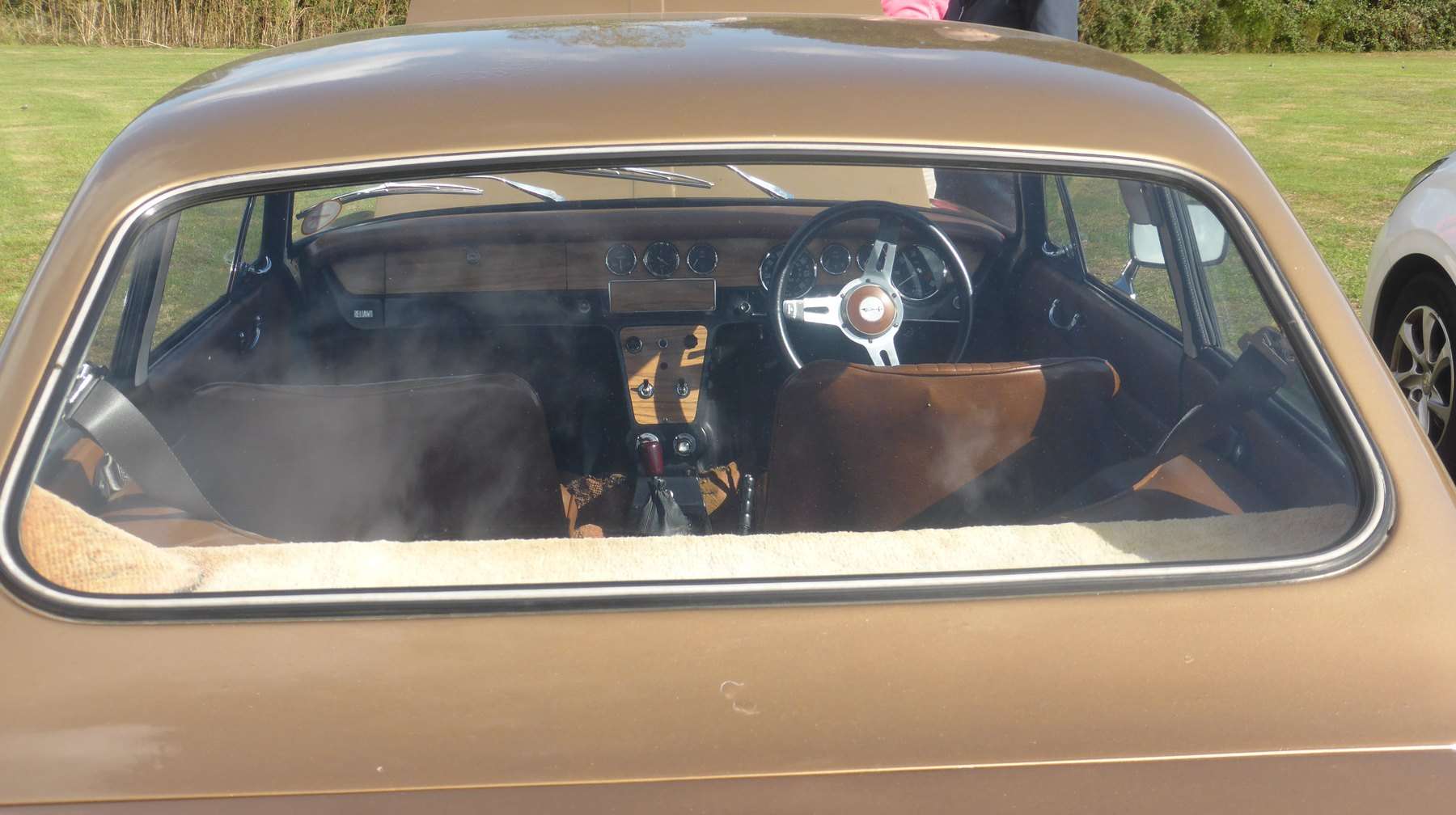
The GTE became the famous Scimitar, but the SE4 is not merely an early version of it. It is a smaller, lower two-door coupé with its own model sequence, driving character and rarity. Survivors offer a combination of Ogle styling, proven Ford power and genuine low-volume British engineering.
Choose by structure, completeness and documented restoration quality. The straight-six car has the strongest historical purity, the 3.0 V6 the best performance and the 2.5 V6 the greatest rarity. Any sound SE4 is special enough that condition should outweigh the badge on its engine.

Continue the Reliant story
Explore the complete Reliant hub. Continue with Reliant Scimitar GTE and Reliant Scimitar GTC.
Frequently asked questions
When was the Reliant Scimitar GT made?
The SE4 coupé was launched in 1964 and production continued into 1970–71 depending on the version and source convention.
What engines did the Scimitar GT use?
Early cars used a 2.6-litre Ford straight-six; later SE4a/b cars used a 3.0-litre Essex V6 and the SE4c used a 2.5-litre Essex V6.
How many Scimitar GTs were built?
RSSOC figures list 297 straight-six SE4s, 590 3.0-litre SE4a/b cars and 118 2.5-litre SE4c cars.
Is the Scimitar GT the same as the GTE?
No. The GT is the earlier compact coupé; the GTE is the later and more spacious sporting estate.
What is the most important buying check?
Inspect the complete steel chassis thoroughly because serious corrosion can remain hidden beneath an attractive glassfibre body.