UNUSUAL CARS MODEL GUIDE
The Enzo Ferrari was Maranello’s early-2000s technology flagship, combining a new 6.0-litre V12 with a carbon-fibre and aluminium-honeycomb monocoque, electrohydraulic transmission, carbon-ceramic brakes and active aerodynamics. Named for the company founder, it translated Formula One thinking into a limited-production road car.
Quick answer: Ferrari built 399 customer cars, followed by a separate 400th example presented to Pope John Paul II and sold for charity. Any Enzo requires factory-record verification plus a specialist inspection of the carbon structure, accident history, V12, F1 gearbox and clutch, hydraulic system, suspension, carbon brakes, electronics, wheels, tyres and model-specific equipment.
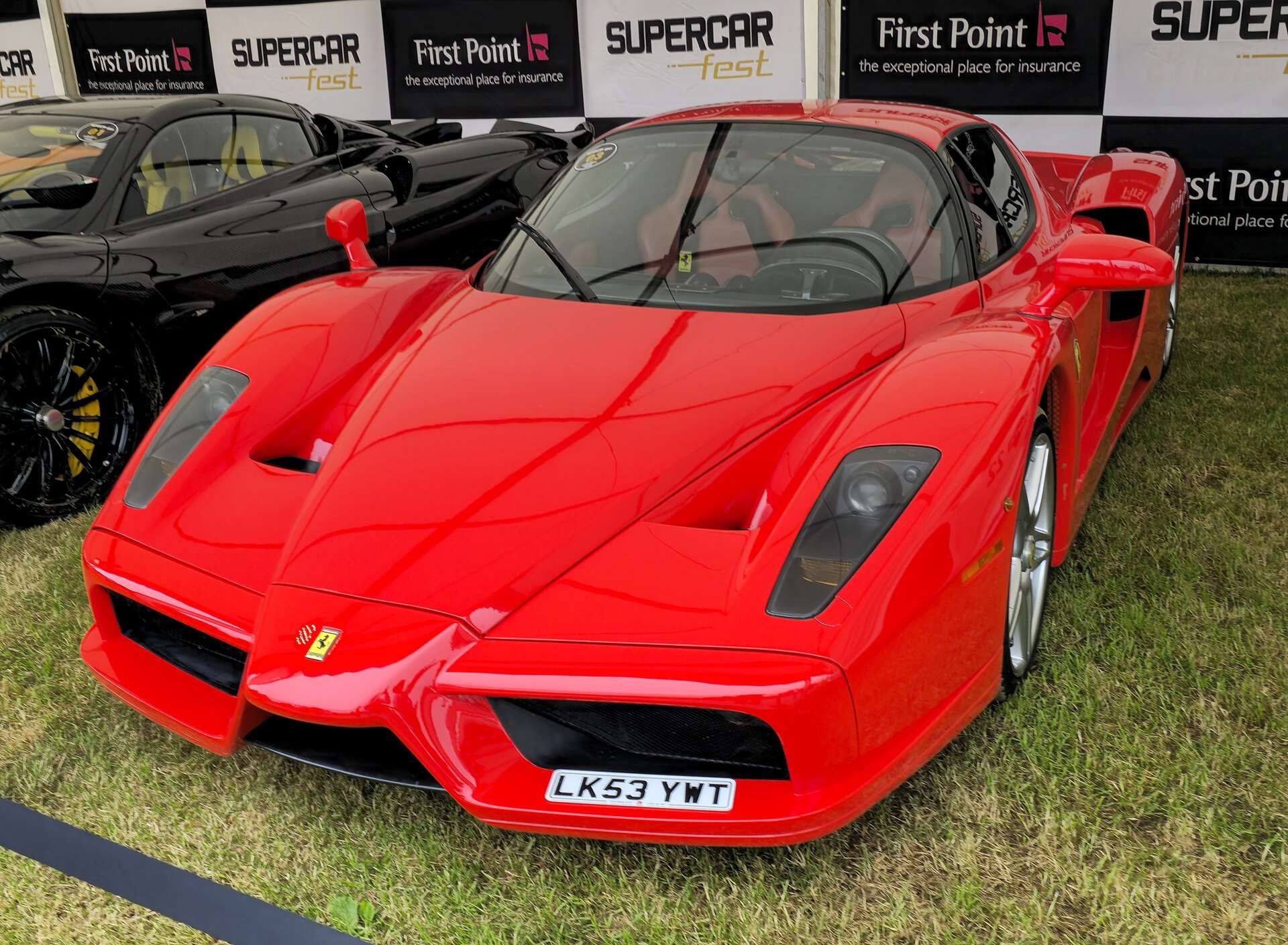
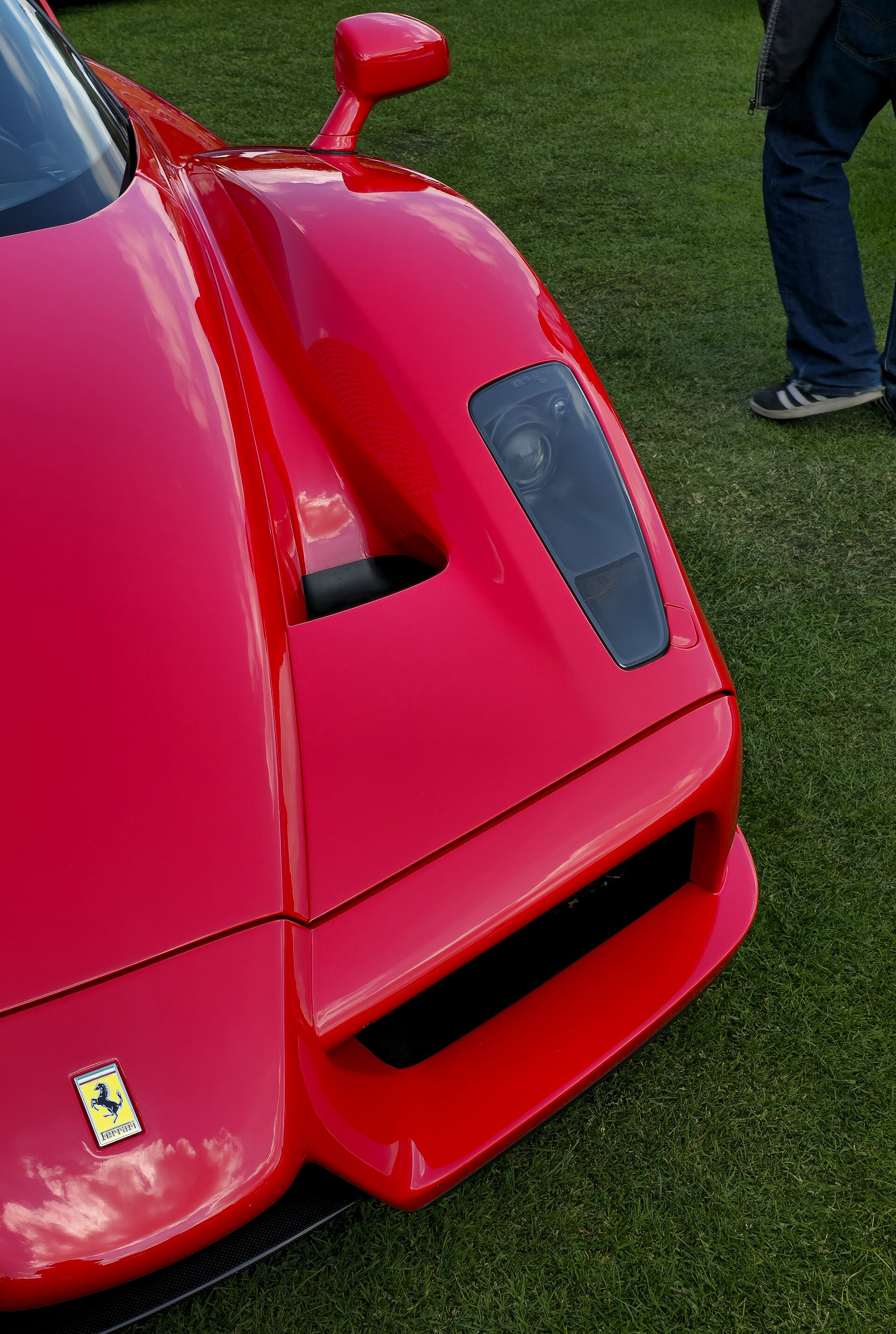
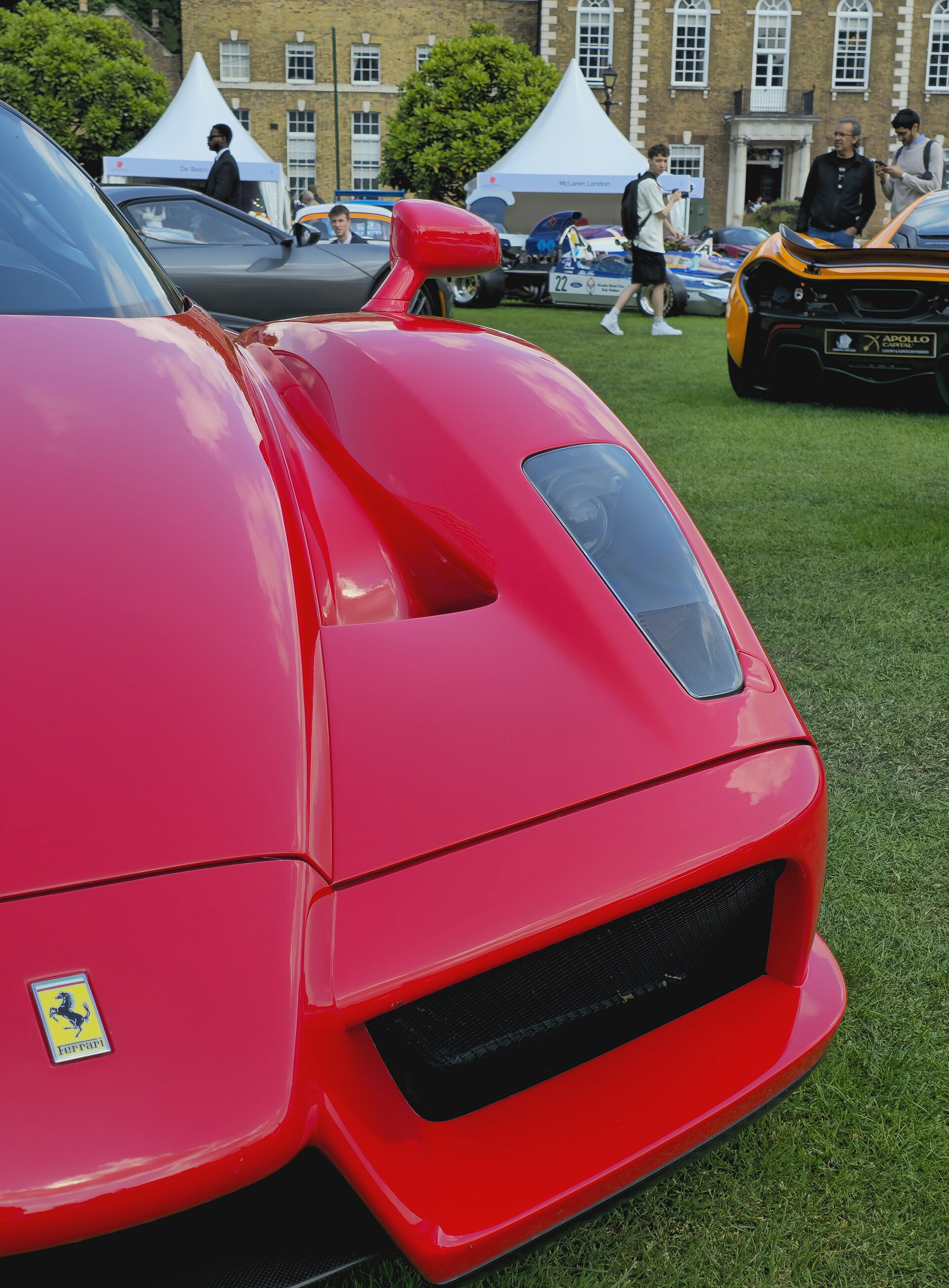
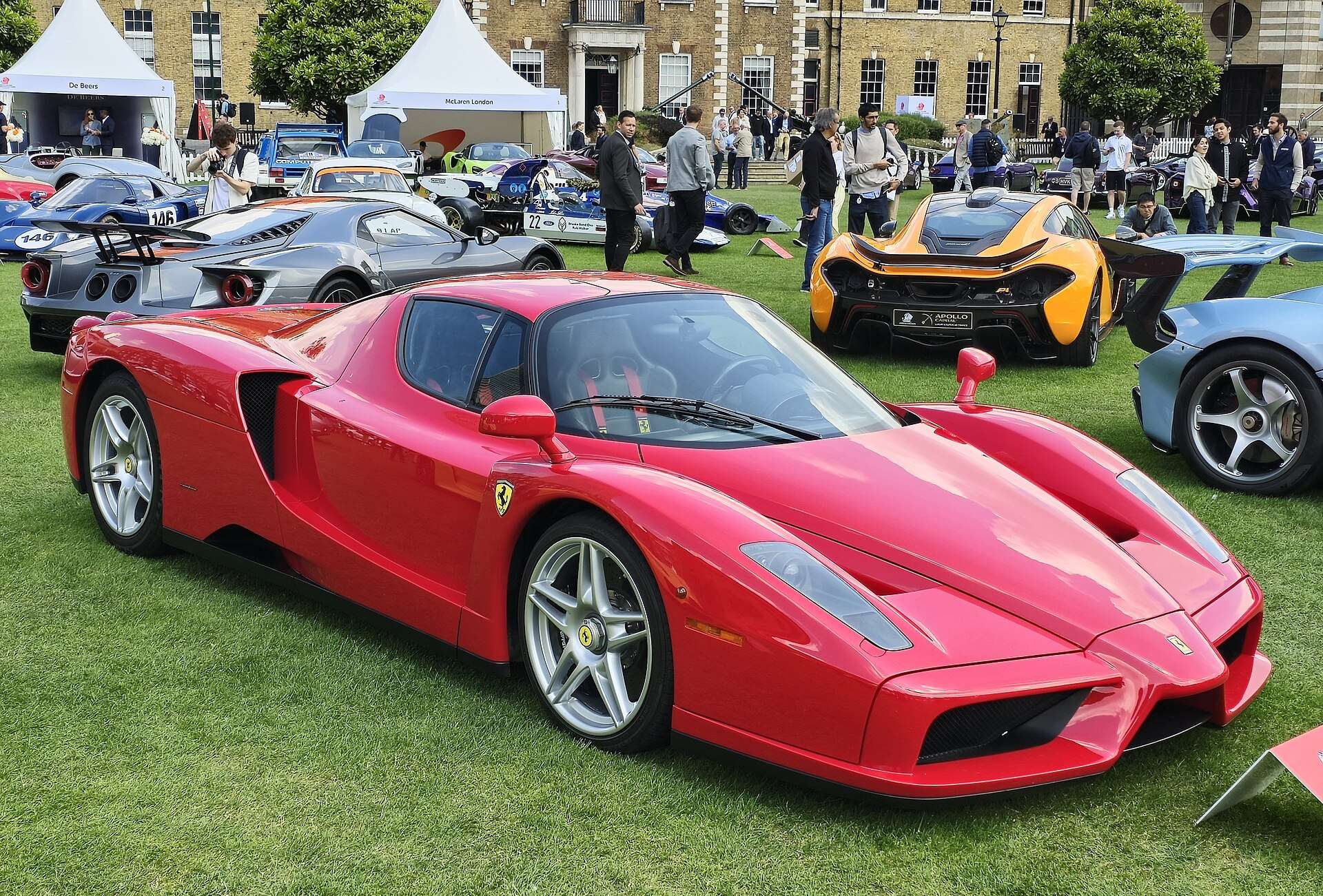
Featured image: red Ferrari Enzo front three-quarter. Photograph by Calreyn88, CC BY-SA 4.0, via Wikimedia Commons; locally hosted.
Ferrari’s Formula One-era flagship
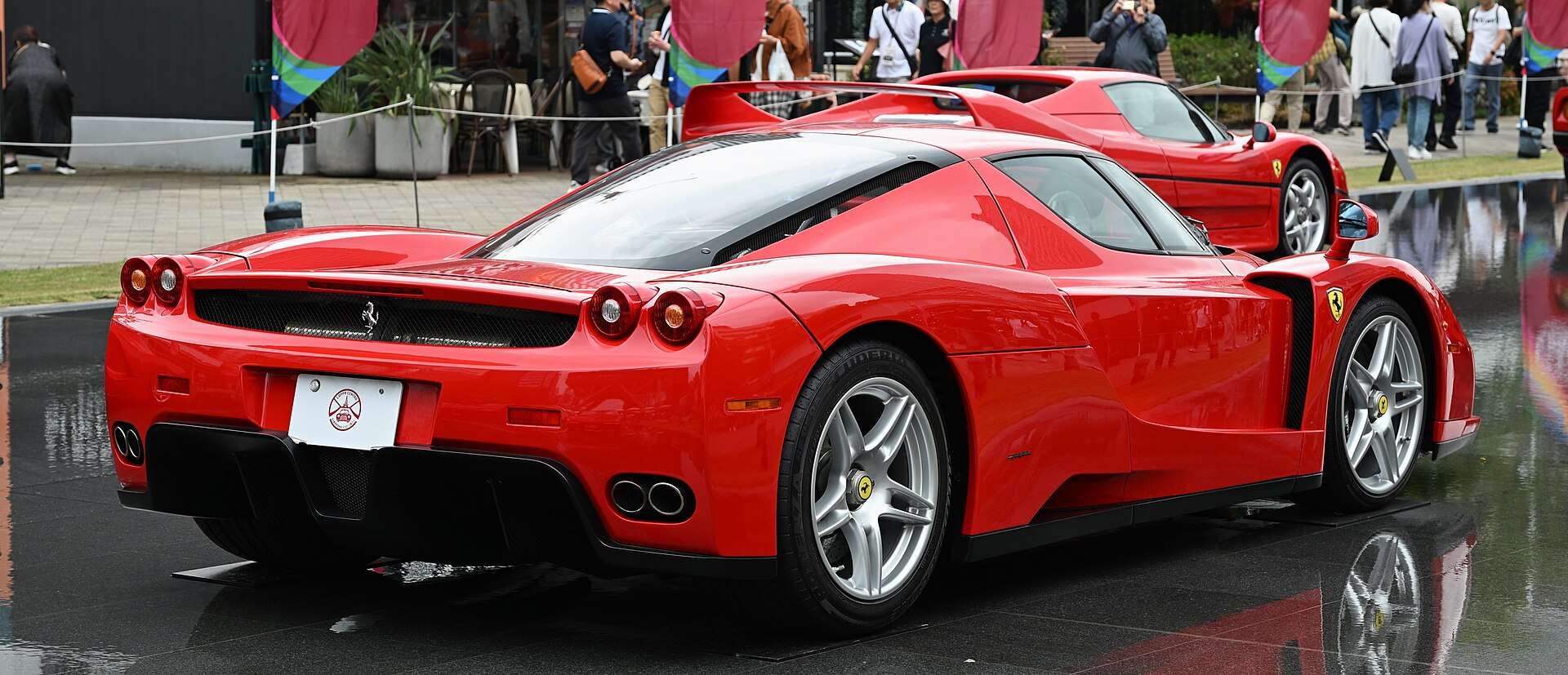
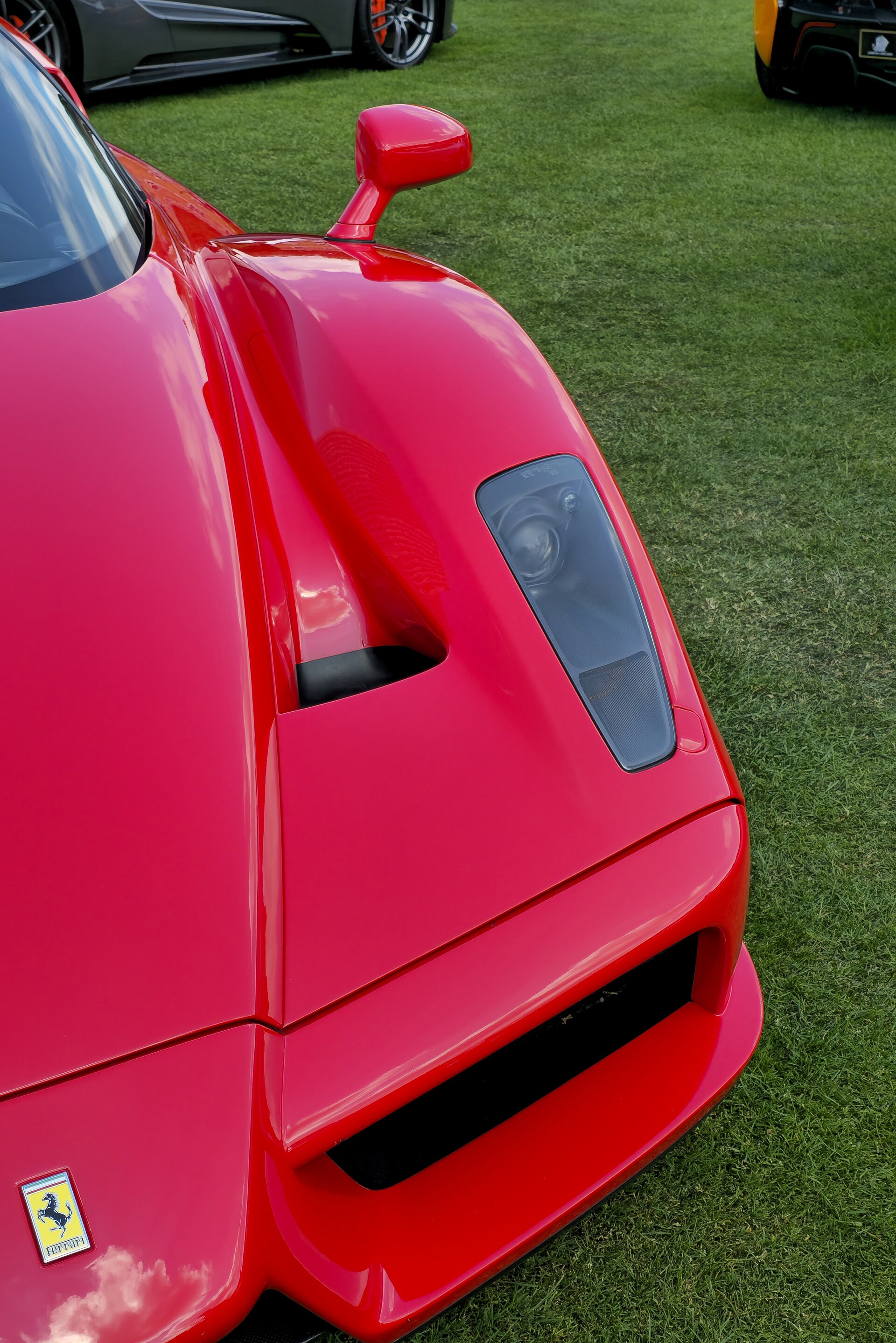
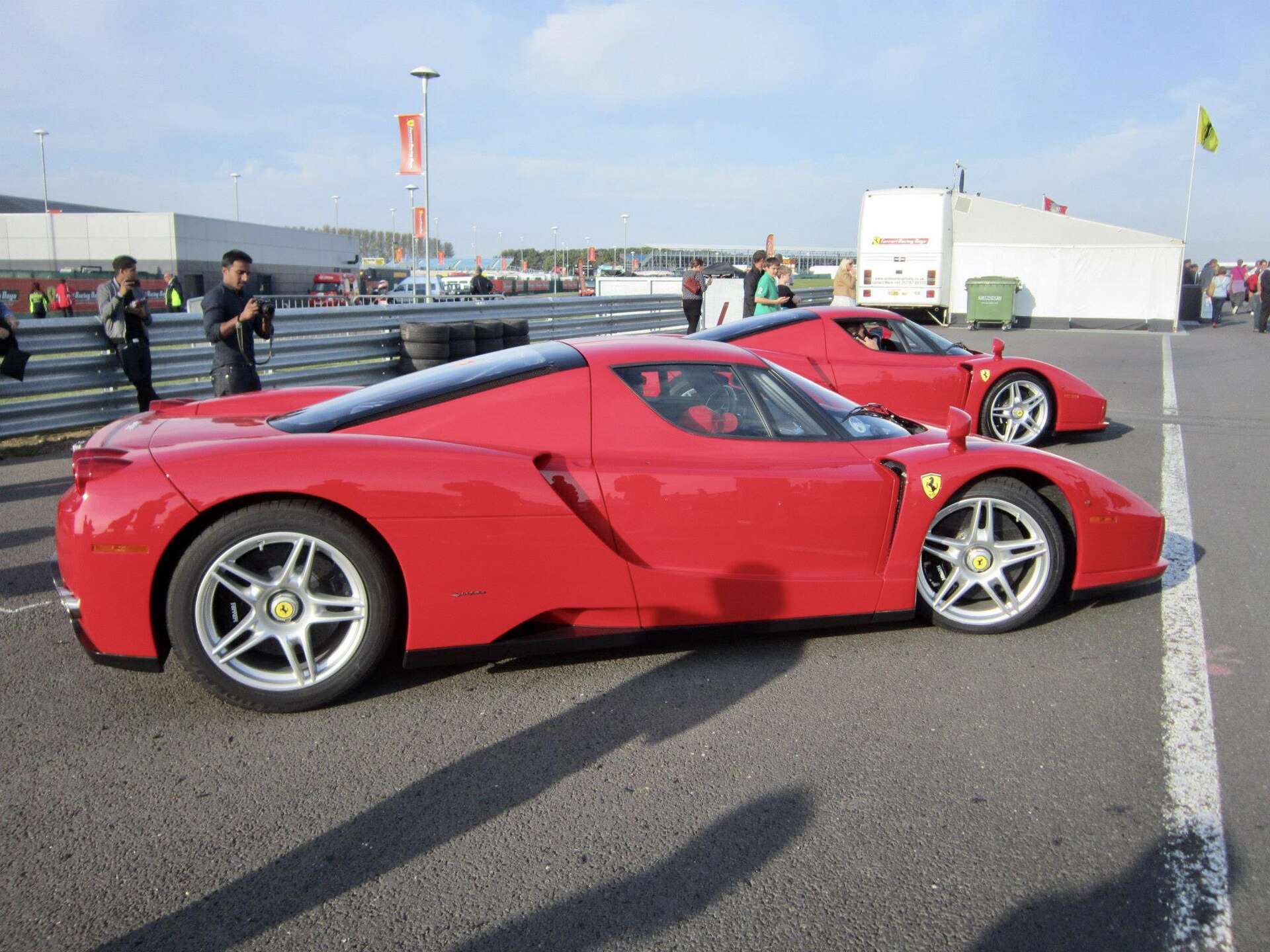
The Enzo arrived in 2002 during Ferrari’s dominant Michael Schumacher era. Pininfarina designer Ken Okuyama gave it a narrow central nose and separate front wings that referenced contemporary single-seaters. Its shape was driven by cooling, underbody airflow and active aerodynamic control rather than by the fixed rear wing used on the F40 and F50.
The F140B V12 was an entirely new 5,998cc engine producing 660CV. It sat longitudinally behind the carbon passenger cell and drove through a six-speed single-clutch F1 transmission. Push-rod suspension, electronically controlled dampers and carbon-ceramic brakes placed technology previously associated with competition cars into a road-legal package.
Specifications and production
| Specification | Enzo Ferrari |
|---|---|
| Engine | 5,998cc 65-degree naturally aspirated V12 |
| Power | 660CV at 7,800rpm |
| Torque | 657Nm at 5,500rpm |
| Transmission | Six-speed electrohydraulic F1 |
| Dry weight | 1,255kg |
| 0–100km/h | 3.65 seconds |
| Maximum speed | More than 350km/h |
Ferrari invited selected clients to buy the original 399-car series. The later papal car was outside that customer run and was auctioned for humanitarian causes. Some databases use different totals because they group prototypes, development chassis or the charity car differently; the defensible public distinction is therefore 399 customer cars plus the additional papal example.
Love cars you don’t see every day?
Get forgotten cars, surprising motoring stories and the most interesting finds from Unusual Cars by email.
Free to join. No spam. Unsubscribe whenever you like. See our privacy policy.
From Enzo to FXX and Maserati MC12
The Enzo’s carbon architecture and engine family supported two important developments. Ferrari created the track-only FXX programme as a rolling laboratory for selected clients, while Maserati used related foundations for the MC12 road and racing project. Neither should be treated as an Enzo variant: each has its own identity, body, development purpose and documentation.
Because the Enzo is a foundation model in modern Ferrari collections, history matters as much as mileage. Confirm chassis, assembly and powertrain records, original colour and trim, tools, books, luggage, factory correspondence and Classiche documentation. Competition-style additions, replacement carbon and non-standard exhausts require transparent records.
Carbon structure, body and accident repair
Inspect the complete carbon-fibre and aluminium-honeycomb monocoque, bonded structures, suspension mounts and underbody. Inconsistent weave, cloudy lacquer, disturbed fasteners, altered panel gaps or non-factory paint can indicate earlier repair. A qualified composite specialist should determine whether work is cosmetic or structural.
The nose, front floor, sills and rear diffuser are vulnerable to grounding. Verify operation of the nose-lift system where fitted and check that lifting points have not been damaged. Doors, glazing, seals and catches must align correctly. Original wheels and centre-lock hardware need careful examination, as do tyres that may have aged while retaining almost full tread.
Engine, F1 transmission and electronics
The V12 should start cleanly from cold, maintain correct oil pressure and temperature and show no persistent smoke or fluid loss. Examine the dry-sump system, radiators, fans, hoses, fuel system, engine mounts and exhaust. Diagnostic data should reconcile mileage, over-revs, stored faults and service records.
Measure clutch wear and test prompt selection of first and reverse. Frequent hydraulic-pump cycling, slow shifts or warning lights require investigation of the pump, accumulator, actuator, sensors and lines. Electronically controlled dampers and ride-height systems must operate without leaks or fault codes. Carbon-ceramic discs are durable in correct use but extremely costly if chipped, cracked or worn.
Sources and further reading
- Ferrari: Enzo technical specifications
- Ferrari: Homage to the Founder
- Ferrari: FXX technical archive
- Sports Car Market: Ferrari Enzo buyer’s guide
Continue the Ferrari story
Explore the complete Ferrari hub. Continue with the Ferrari F50 and Ferrari 599.
Frequently asked questions
How many Ferrari Enzos were built?
Ferrari built 399 customer cars, followed by a separate 400th example presented to Pope John Paul II and later sold for charity.
What engine does the Ferrari Enzo use?
It uses a 5,998cc naturally aspirated V12 producing 660CV at 7,800rpm.
Does the Ferrari Enzo have a manual gearbox?
It has a six-speed single-clutch electrohydraulic F1 transmission operated by steering-wheel paddles, not a conventional manual lever.
Is the Maserati MC12 an Enzo?
No. It uses related architecture and engine foundations but is a separate Maserati model with different bodywork, dimensions and competition purpose.
What should be checked before buying an Enzo?
Verify factory identity and provenance, then inspect the carbon tub, body repairs, V12, F1 clutch and hydraulics, suspension, carbon brakes, electronics, tyres and original equipment.