UNUSUAL CARS MODEL GUIDE
The original Aston Martin Virage is the overlooked hinge between two eras. Unveiled at the 1988 British International Motor Show and delivered from 1989, it replaced a body lineage dating back to the DBS while retaining hand-built Newport Pagnell character. A new 32-valve version of the 5.3-litre V8, modernised styling by John Heffernan and Ken Greenley and a more contemporary cabin promised a fresh start. The later supercharged Vantage stole the headlines, leaving the naturally aspirated Virage unusually rare and undervalued by Aston standards.
Quick answer: the Virage was produced from 1989 to the mid-1990s with a 5,340 cc four-cam, 32-valve V8 driving the rear wheels through a five-speed manual or four-speed automatic transmission. A Virage Volante followed, while Works Service offered 6.3-litre and wide-body conversions. Specification varies considerably, so build records and conversion invoices are essential.
Featured image: 1991 Aston Martin Virage in Cumberland Grey. Photograph by File:DSC 4917 (21495888610).jpg: Draco2008 derivative work: Mr.choppers, CC BY 2.0, via Wikimedia Commons; locally hosted.
A new shape for Newport Pagnell
Aston Martin invited designers to propose a replacement for the long-serving V8. The selected Heffernan and Greenley design used a clean notchback profile, broad shoulders and conventional lamps, giving the car a more modern appearance without abandoning grand-touring proportions.
The Virage was unveiled at Birmingham’s NEC in October 1988. It remained hand-built in small numbers, but components sourced from larger manufacturers helped control development costs. That pragmatic mixture is part of the car’s identity and can assist parts supply, provided the Aston-specific installation is understood.

Engine, gearboxes and versions
| Version | Main distinction |
|---|---|
| Virage Coupé | Naturally aspirated 5.3-litre 32-valve V8 |
| Manual | Five-speed gearbox |
| Automatic | Four-speed transmission suited to touring use |
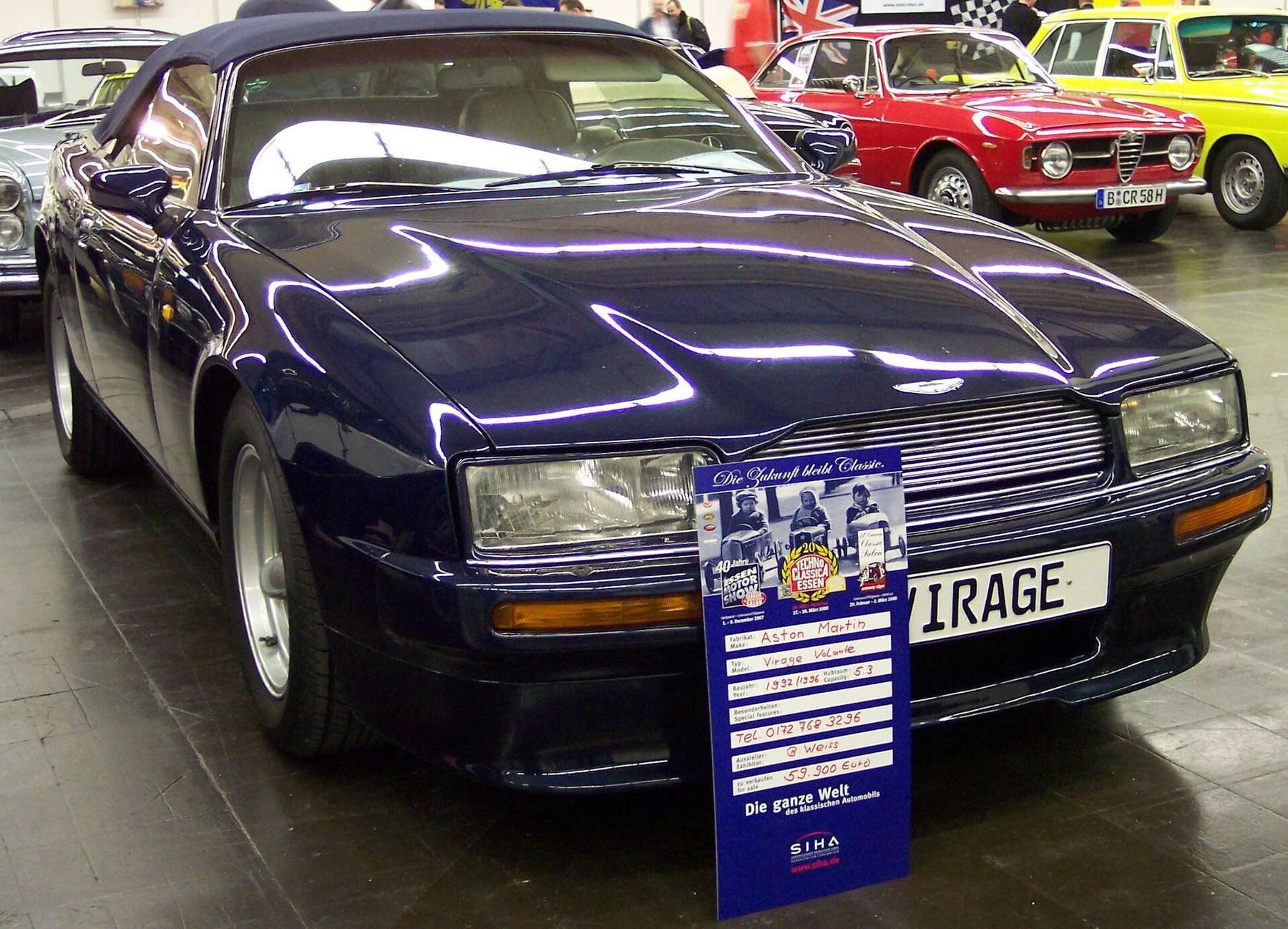
| Virage Volante | Open derivative offered during the 1990s |
| Works Service 6.3 | Larger-capacity conversion, often paired with wide-body and chassis work |
The later V550/V600 Vantage shares the Virage family but is a comprehensively reworked twin-supercharged model. A naturally aspirated Virage wearing Vantage-style wheels or body parts does not become a Vantage.

Love cars you don’t see every day?
Get forgotten cars, surprising motoring stories and the most interesting finds from Unusual Cars by email.
Free to join. No spam. Unsubscribe whenever you like. See our privacy policy.
Cabin, electronics and usability
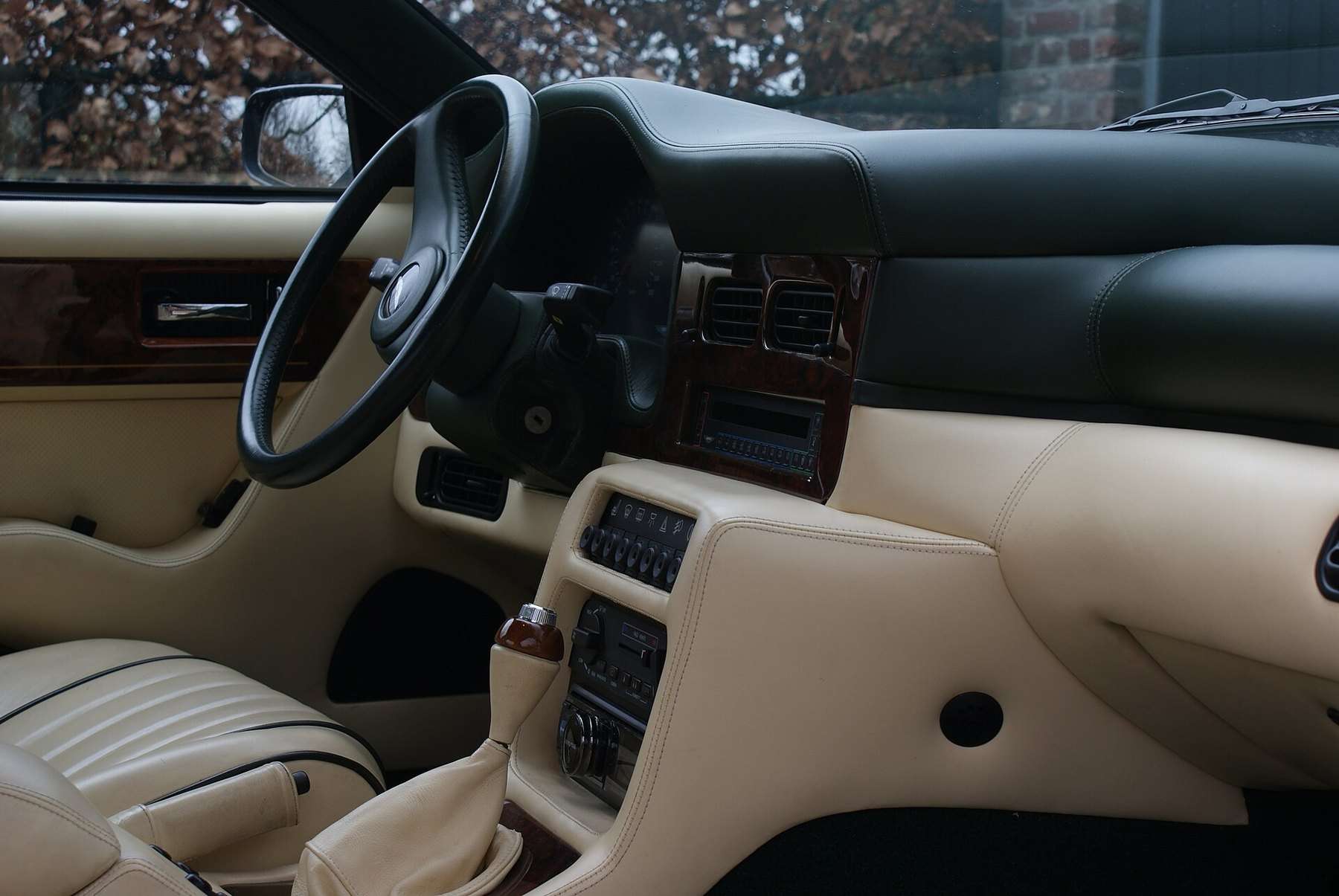
The interior is more contemporary than the outgoing AM V8 but remains unmistakably hand-finished, with extensive leather and timber. Switches and lamps came from a range of outside suppliers, yet trim, instruments and installation are Aston-specific. Check seat operation, air conditioning, windows, central locking, instruments, warning lights and audio equipment.
Water ingress can damage trim and electrical connections. Examine the windscreen and rear-screen areas, door seals, boot and carpets. A functioning cabin on a brief viewing is not enough: run every system repeatedly and allow the air conditioning time to prove that it can cool the large glasshouse.
Works Service 6.3 and wide-body cars
For owners seeking more performance, Aston Martin Works Service developed a 6.3-litre conversion with substantial engine, brake, wheel and body options. Some cars received the complete wide-body treatment; others were upgraded in different combinations. Independent specialists also created larger-capacity cars.
These conversions can be desirable, but only documentation establishes who did the work and what was included. Compare invoices, engine numbers, brakes, suspension and body specification rather than relying on a badge or a seller’s description.

Structure, V8 and driveline
The aluminium body covers steel structure, so inspect for bubbling and corrosion at sills, floors, bulkheads, suspension mounts, wheelarches and window apertures. Heavy doors should not drop, and panel fit should be consistent. Poor accident repair can be especially difficult to correct on a low-volume hand-built shell.
From cold, the V8 should build oil pressure promptly and settle without smoke or timing noise. Check cooling, fuel injection, ignition, oil leaks and exhaust condition. Manual cars need a progressive clutch and clean selection; automatics should engage quickly and change smoothly when fully warm. Differential noise, vibration and neglected universal joints require attention.
Buying the right Virage
The car’s relative affordability can be misleading because restoration and major mechanical work remain Aston Martin-expensive. Prioritise continuous specialist history, sound structure and evidence of use. A car stored for years may need fuel-system, cooling, brake, tyre, seal and electrical work before it becomes dependable.
Commission a pre-purchase inspection from a specialist familiar with the Virage family. Confirm whether the car is standard, Works-upgraded or independently modified, and price it according to documented identity and condition rather than the visual drama of wide arches or later wheels.
Sources and further reading
- Aston Martin Media: Virage history
- Aston Martin: V8 Virage model history
- Car Collector International: Virage buyer's guide
- Aston Workshop: Virage-family ownership and workshop guide
Continue the Aston Martin story
The Virage modernised Aston Martin’s traditional hand-built V8 formula and provided the platform from which the extreme V550 and V600 would emerge. Explore the complete Aston Martin hub. Read about the original V8 Vantage. Continue with the V550 and V600.
Frequently asked questions
When was the original Aston Martin Virage introduced?
The Virage was unveiled at the 1988 British International Motor Show and customer production began in 1989.
What engine does the Aston Martin Virage use?
It uses a naturally aspirated 5.3-litre four-cam, 32-valve Aston Martin V8.
Was the Virage available as a manual?
Yes. Buyers could choose a five-speed manual or a four-speed automatic transmission.
What is a Virage 6.3?
It is a larger-capacity conversion offered through Aston Martin Works Service, often combined with upgraded brakes, wheels and optional wide-body treatment.
What are the main Virage buying checks?
Inspect the steel structure and aluminium body, cooling and fuel systems, gearbox, differential, brakes, suspension, electrical equipment, air conditioning and documentation for any Works or specialist conversion.