UNUSUAL CARS MODEL GUIDE
The W202 Mercedes-Benz C36 AMG was the first series-production car jointly developed by Mercedes-Benz and AMG after their formal cooperation began. Based on the C280 Sport, its enlarged 3.6-litre M104 straight-six produced 206 kW (280 PS), and 5,221 examples were built between 1993 and 1997.
Quick answer: The C36’s significance and rarity make originality crucial. Buyers should check structural corrosion, engine wiring, head-gasket and oil leaks, cooling, transmission behaviour, suspension, brakes and the presence of AMG-specific bodywork, wheels, instruments and interior trim.
The first jointly developed Mercedes-AMG production car
AMG had modified Mercedes-Benz cars for decades, but the C36 marked a new relationship. Mercedes-Benz identifies it as the first car jointly developed by the two companies. Shown in 1993 and entering production in January 1994, it became the compact C-Class flagship before V8 AMG models arrived.
From C280 Sport to 3.6-litre AMG
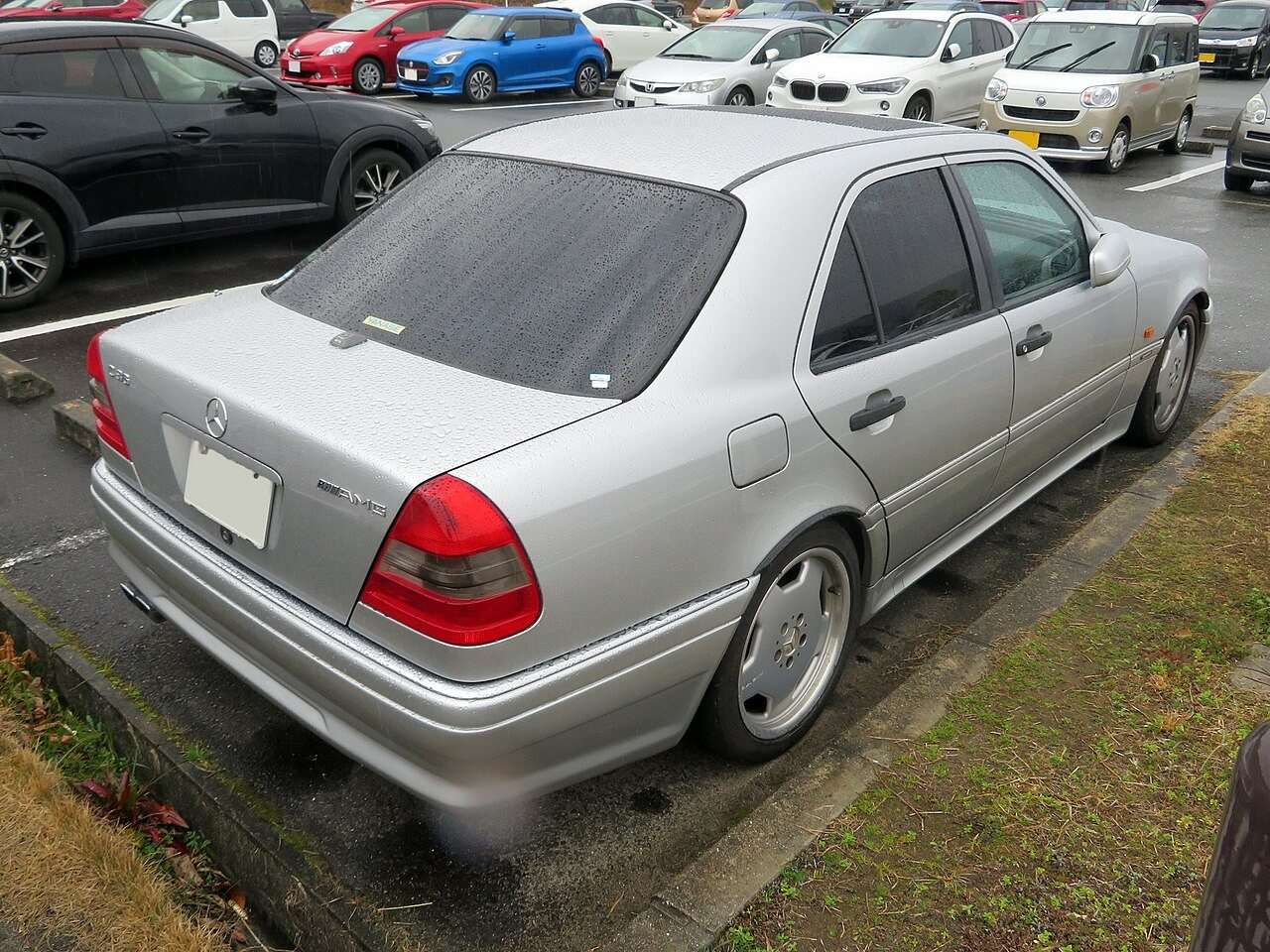
AMG enlarged the C280’s M104 straight-six by increasing bore and stroke, then fitted special pistons, a revised crankshaft and a higher compression ratio. Output rose to 206 kW (280 PS). A four-speed automatic was used initially, with later cars receiving a five-speed unit; exact change points and market specifications should be checked against build data.

Main versions and specifications
| Version | Powertrain or distinction | Guide note |
|---|---|---|
| C280 Sport | 2.8-litre M104 straight-six | Production basis for C36 development |
| C36 AMG | 3.6-litre M104; 206 kW / 280 PS | First jointly developed Mercedes-AMG model |
| C43 AMG | 4.3-litre V8; successor | Replaced C36 from 1997 |
Chassis, brakes and understated styling
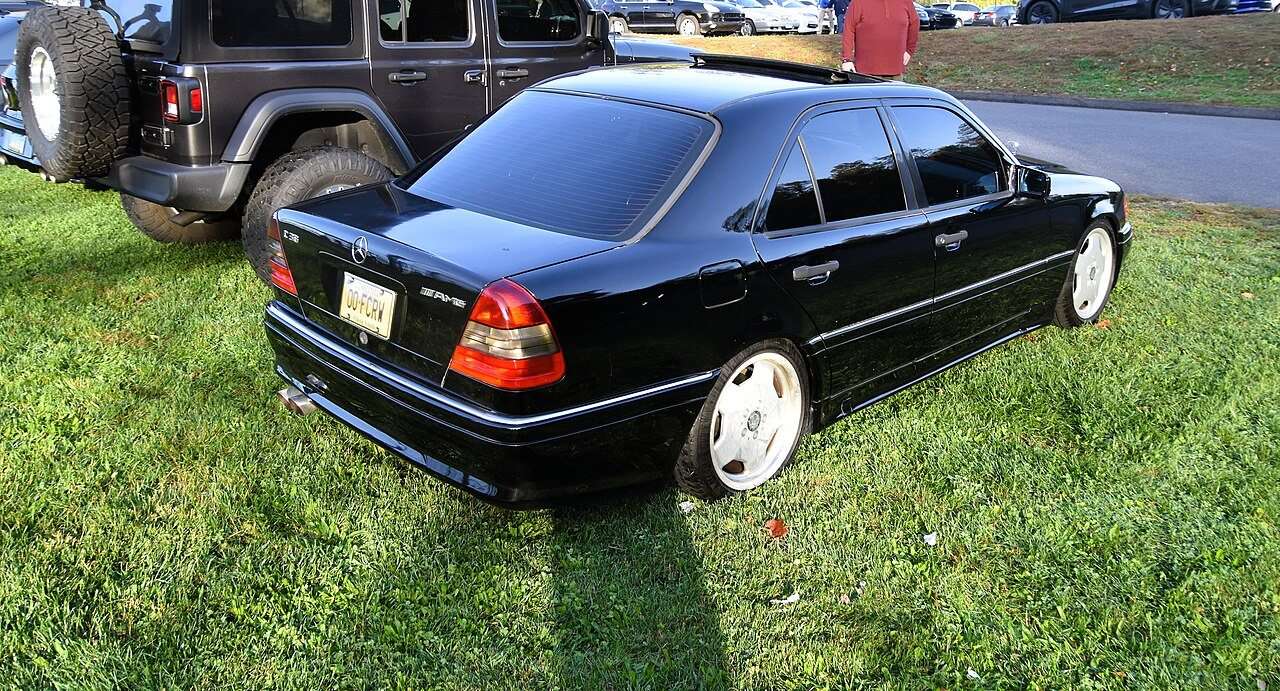
AMG lowered the chassis by approximately 35 mm and fitted larger wheels, revised suspension, brakes and aerodynamic bodywork. The visual treatment was restrained: different bumpers, side skirts and wheels identified the car without the aggressive width of later AMG models.
Love cars you don’t see every day?
Get forgotten cars, surprising motoring stories and the most interesting finds from Unusual Cars by email.
Free to join. No spam. Unsubscribe whenever you like. See our privacy policy.
Production and rarity
Mercedes-Benz records 5,221 examples built between autumn 1993 and June 1997. That makes the C36 uncommon but not a one-off homologation special. Right-hand-drive UK cars form only part of that total, and surviving examples vary significantly in originality and maintenance history.
Mercedes C36 AMG W202 buying guide
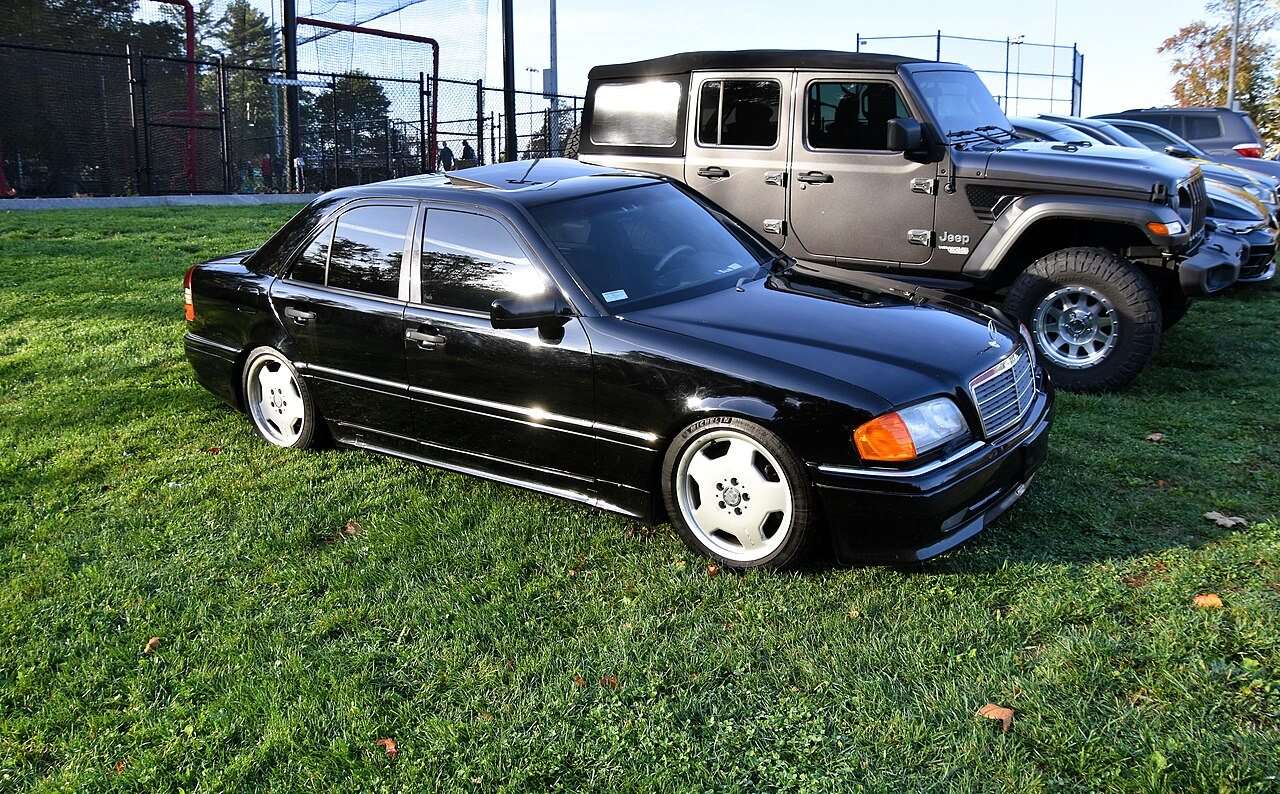
Inspect front wings, arches, sills, jacking points, floor edges, boot wells and suspension mounting areas for corrosion. Check the engine wiring harness, head-gasket area, oil leaks and cooling stability. The automatic should engage promptly and shift consistently. Listen for suspension knocks and differential noise, then test climate control, seat adjustment, windows and instruments. Confirm factory AMG identity through the VIN and data card, and assess wheels, bumpers, side skirts, brakes, exhaust and interior trim for originality.
Why it matters
The C36 established the modern Mercedes-AMG production relationship. It combined traditional straight-six character with subtle styling and factory-backed development, making it the historical starting point for every later AMG C-Class.
Research sources
Continue the Mercedes-Benz story
Explore the Rare & Performance Mercedes-Benz hub, then compare the 190E sixteen-valve guide and the C63 AMG W204 guide.
Frequently asked questions
Why is the C36 AMG historically important?
Mercedes-Benz describes it as the first production car jointly developed by Mercedes-Benz and AMG.
What engine does the C36 AMG use?
It uses an AMG-developed 3.6-litre version of the M104 straight-six.
How much power does the C36 AMG have?
Mercedes-Benz rated it at 206 kW, or 280 PS.
How many C36 AMGs were built?
Mercedes-Benz states that 5,221 examples were produced between 1993 and 1997.
What should buyers inspect first?
Prioritise corrosion, engine wiring, head-gasket and oil leaks, cooling, transmission condition and genuine AMG equipment.