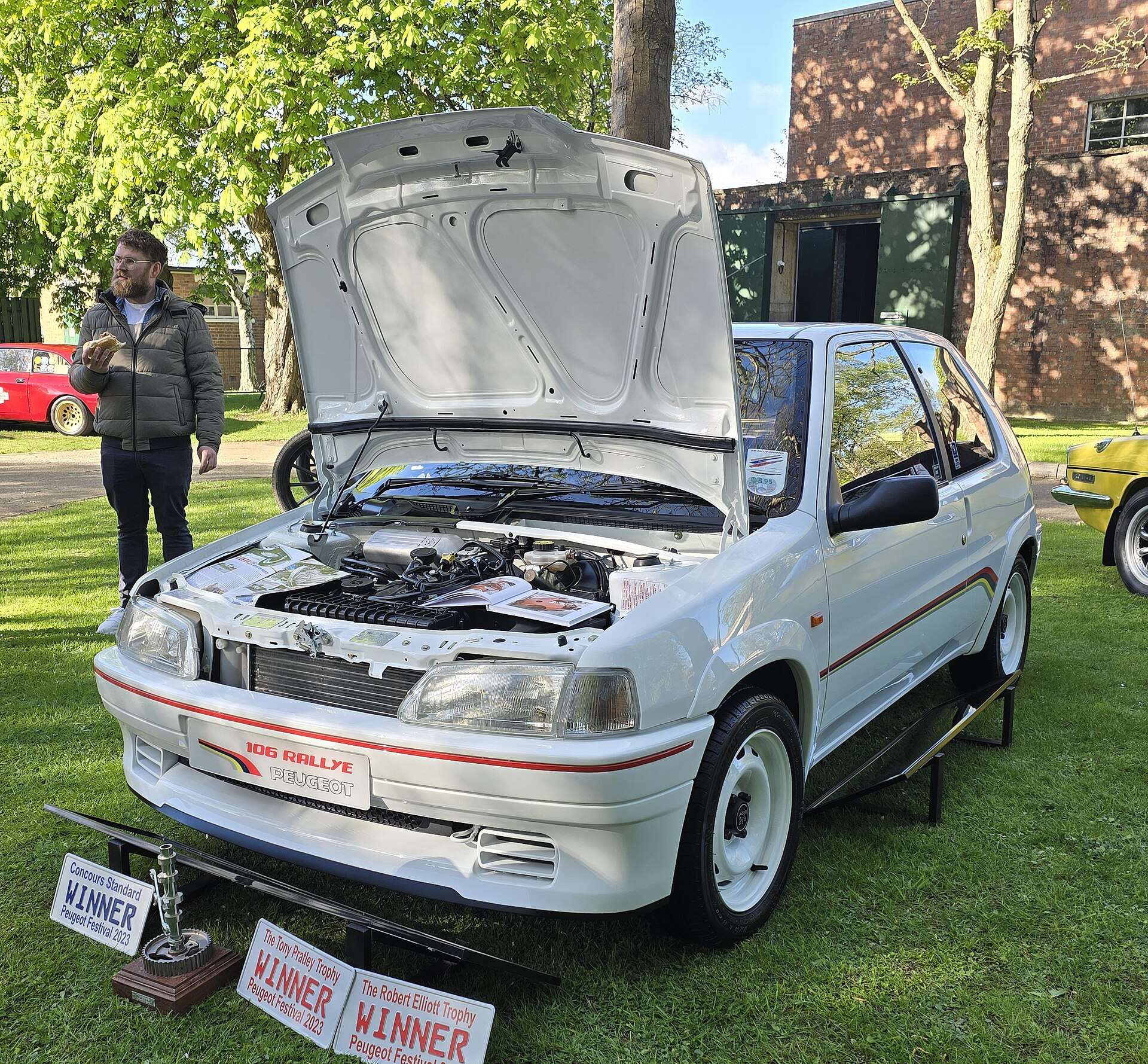
The Peugeot 106 Rallye and GTI prove that memorable hot hatches do not need huge power. One stripped weight and celebrated revs; the other added a sophisticated 16-valve engine and everyday equipment. Together they became the sharpest members of the 106 family.

1. The Rallye followed a proven Peugeot formula
Peugeot had already used the Rallye badge on stripped, lightweight versions of the 205. The 106 repeated the idea: modest engine capacity, minimal equipment and a chassis tuned to reward commitment.
2. Britain’s Series 1 used a special 1.3-litre engine
The first UK Rallye used a 1,294 cc TU engine with aggressive cam timing and multipoint injection. Its roughly 100 bhp arrived high in the rev range, encouraging drivers to use the close-ratio gearbox fully.
3. Weight mattered more than luxury
Sound deadening, electric conveniences and unnecessary trim were removed. At around 825 kg, the Series 1 Rallye delivered lively performance and exceptional responses without chasing a large power figure.
4. Steel wheels were part of the appeal
White Michelin-style steel wheels were deliberately simple, strong and light. Combined with coloured stripes and sparse cabin trim, they gave the road car the appearance of a freshly prepared club rally machine.
Love cars you don’t see every day?
Get forgotten cars, surprising motoring stories and the most interesting finds from Unusual Cars by email.
Free to join. No spam. Unsubscribe whenever you like. See our Privacy Policy.
5. The Series 2 Rallye changed character
Based on the facelifted 106, the later Rallye adopted a 1.6-litre eight-valve engine. It had more torque and was easier to use daily, though enthusiasts often regard the high-revving 1.3 as the purer concept.

6. The GTI’s engine was related to the Saxo VTS unit
The 106 GTI used PSA’s 1.6-litre TU5J4 16-valve engine, also found in the Citroën Saxo VTS. With about 120 bhp in a car weighing around 950 kg, it offered stronger performance than either Rallye.
7. The GTI replaced the XSi as the range flagship
Peugeot introduced the GTI with the facelifted 106, combining a more powerful engine with body-coloured arch extensions, alloy wheels, better seats and additional comfort equipment.
8. Passive rear steering shaped the handling
Like other small Peugeots of the era, the 106 used a compact torsion-bar rear axle. Compliance in its mountings allowed subtle toe changes under cornering loads, helping the car rotate eagerly when the driver lifted the throttle.

9. Rallye and GTI are not trim levels of the same car
The Rallye prioritised low mass and mechanical simplicity; the GTI paired greater power with broader everyday usability. Their different engines, gearing and equipment create distinct driving experiences.
10. Rear axles are now a crucial buying check
Worn trailing-arm bearings can cause negative rear-wheel camber and damage the axle tube. Correct repairs are specialist work, making stance and tyre wear important clues when assessing any performance 106.
Love cars you don’t see every day?
Get forgotten cars, surprising motoring stories and the most interesting finds from Unusual Cars by email.
Free to join. No spam. Unsubscribe whenever you like. See our Privacy Policy.
More Peugeot hot hatches
Read our Peugeot 205 GTI 1.6 and 1.9 facts and explore the Peugeot archive.
Sources
For more about this car, read our Peugeot 106 guide.