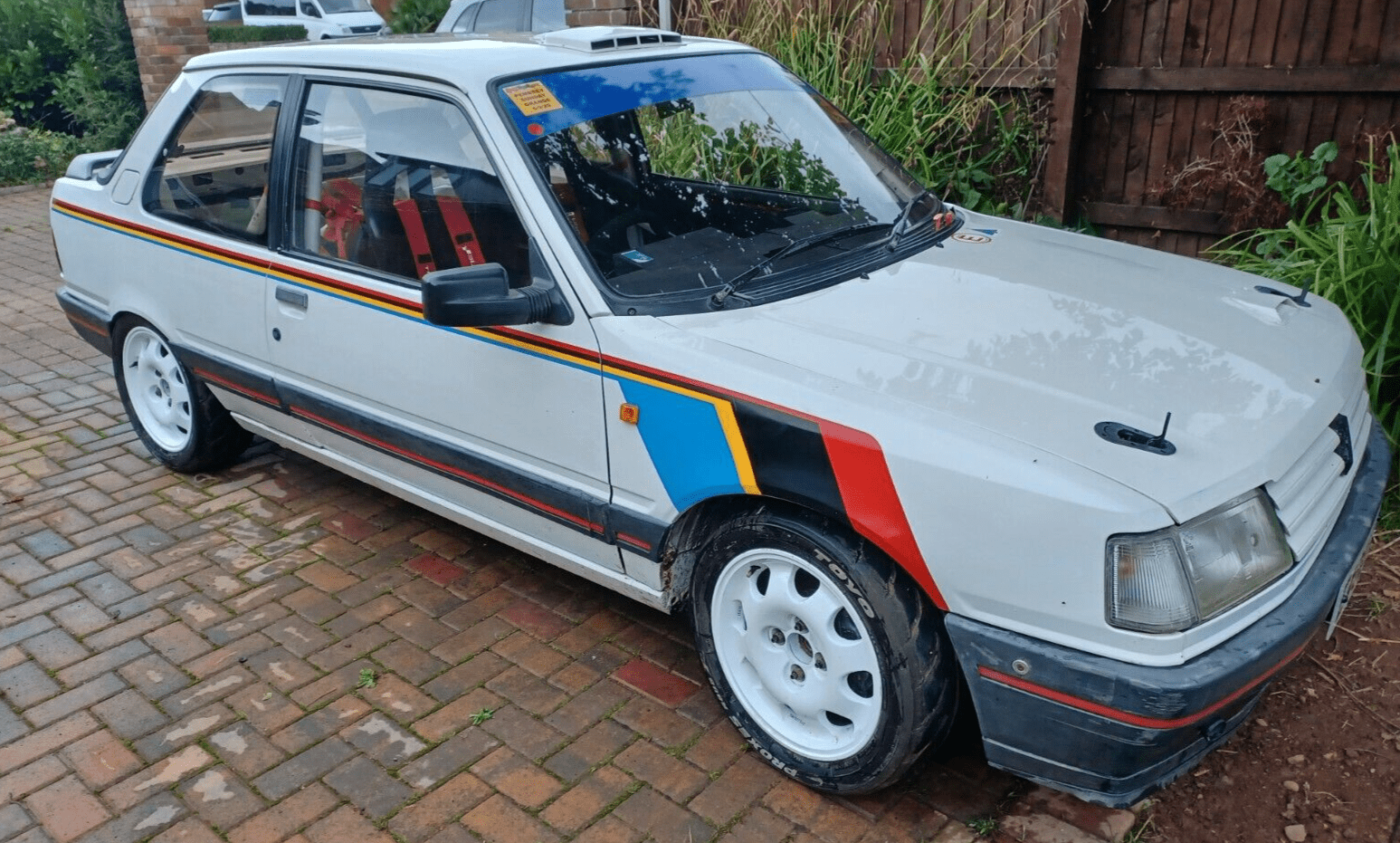
The Peugeot 309’s balanced front-wheel-drive chassis made it a credible competition platform. Yet a “309 16v rally car” may be a genuine period-specification build, a later engine conversion or a modern club car—three very different propositions.
Peugeot 309 competition background
The 309 GTI combined the 205 GTI’s 1.9-litre engine with a longer wheelbase and wider track. Peugeot’s heritage material notes the model’s competition use and describes the 1989 GTI 16 as a particularly formidable compact performance car. National rally programmes and private entrants developed the platform further.
Today, surviving rally-prepared 309s span period historic cars, replicas and continuously developed club machines. Eligibility depends on the event and the car’s documented specification.
Factory GTI 16 versus converted 16v car
| Type | Meaning |
|---|---|
| Factory 309 GTI 16 | Original 1989-on three-door model with the 1,905cc 160hp 405 Mi16-related engine |
| 16v conversion | A 309 shell fitted later with a 16-valve engine; identity depends on the base car and records |
| Rally replica | A car styled or built to evoke a works or period competition 309 without necessarily matching its homologated specification |
The 1988 rally car originally featured here
The expired seller description identified a 1988 three-door XS shell fitted with a Peugeot 306-derived two-litre 16-valve engine producing a claimed 180bhp. Equipment included a welded cage, limited-slip differential, close-ratio gearbox, four-piston front brakes, adjustable suspension, hydraulic handbrake, sump guard, electric power steering and multiple sets of wheels.
That remains a useful illustration of a developed club car, but the advert cannot verify present condition, output or compliance. Its base-shell description also makes clear why it should not be presented as an original factory 309 GTI 16.
What to check before buying
- Choose the intended championship or event before judging the specification.
- Inspect the shell for corrosion, fatigue, accident damage and poor previous repair.
- Have the cage design, installation and mounting points assessed against current rules.
- Check dates and condition of seats, harnesses, extinguishers and other safety equipment.
- Verify the engine code, capacity, management, mapping and rebuild history.
- Assess gearbox ratios, differential, driveshafts, wheel bearings and cooling as a system.
- Inspect suspension travel, rear-beam condition, brakes, wheel studs and spare wheels.
- Match VIN, V5C where applicable, competition records and declared modifications.
Eligibility changes over time
A car accepted by an organiser years ago may need updates or may no longer fit the intended class. Historic competition can require conformity with period specification, while club events may allow different modifications. Consult the current governing-body and event regulations before purchase, then obtain specialist advice where an engine swap or replica specification creates ambiguity.
Frequently asked questions
Did Peugeot make a 309 GTI 16?
Yes. Peugeot launched the factory 160hp GTI 16 in 1989 using the engine associated with the 405 Mi16.
Is a 306-engined 309 a genuine GTI 16?
Not by virtue of the engine. It may be a well-built conversion, but factory identity requires the correct original car and documentation.
Can a rally car be road legal?
Potentially, but road legality, insurance and competition eligibility are separate requirements and must each be verified.
Research note: factory 309 GTI and GTI 16 history was checked against official Peugeot material. The featured conversion’s specification came from its historic seller description. Always use current competition regulations and a physical inspection.