The Toyota Starlet KP61 is the small rear-wheel-drive hatchback that became an unlikely rally, circuit and modified-car favourite. Its simple 1.3-litre engine, light body and balanced chassis give it an enthusiast identity very different from later front-wheel-drive Starlets.
This guide covers KP61 history and specifications, its competition appeal, the differences between markets and facelifts, common problems and the checks that matter when buying a standard, imported or modified example.
Toyota Starlet KP61 at a glance
| Generation | Second-generation Starlet, KP60-series |
|---|---|
| Launch | 1978 |
| KP61 engine | 1,290cc 4K-series OHV four-cylinder |
| Layout | Front engine, rear-wheel drive |
| Gearboxes | Four- or five-speed manual; automatic in some markets |
| Suspension | MacPherson struts front; four-link coil-sprung live rear axle |
| Wheelbase | 2,300mm |
| Why enthusiasts want one | Low weight, simple mechanics and adjustable RWD handling |
What is a Toyota Starlet KP61?
Toyota introduced the second-generation Starlet in February 1978 as its entry-level compact hatchback. Although front-wheel drive was becoming the norm for small cars, Toyota retained a conventional front-engine, rear-wheel-drive layout. The KP61 code identifies cars fitted with the 1,290cc 4K engine; related KP60-series versions used other K-series capacities in some markets.
Toyota’s own history records a curb weight of roughly 695–710kg for representative early Japanese grades. That combination of low mass, rack-and-pinion steering, front disc brakes and a coil-sprung four-link rear axle explains why an economy hatch developed such a strong sporting reputation.
Engines, gearboxes and versions
The 4K is a water-cooled, pushrod four-cylinder engine known for simplicity rather than high standard output. Exact power varies with market, emissions equipment and measurement method, so confirm a car’s specification from its chassis plate and documentation. Four- and five-speed manual gearboxes were offered, alongside automatics in some markets.
The styling changed during production. A 1980 facelift brought square headlamps, while late cars adopted a more sloping nose and revised rear-hatch opening. Three- and five-door bodies, trim grades and equipment varied considerably between Japan, Britain, continental Europe and other export markets.
Identification matters: “KP61” is often used loosely for any rear-wheel-drive Starlet. Check the model code, engine number and market specification before ordering parts or judging originality.
Why the KP61 became a competition favourite
Light weight, rear-wheel drive and simple suspension made the Starlet approachable for rallying, circuit racing, autocross and hillclimbs. The FIA historic database records the 1,300cc KP61 as a Group A-homologated model from 1982, while Toyota’s motorsport heritage includes KP61 one-make competition.
Today, competition influence is also why original cars are scarce. Many shells have been converted into rally cars, fitted with larger Toyota engines or altered for drifting. A modified KP61 can be excellent, but cage installation, suspension geometry, axle choice, brakes and fuel systems must be assessed as engineering—not just as a parts list.
Toyota Starlet KP61 buying checklist
Body and rust
- Inspect sills, jacking points, floors, chassis rails and suspension mounting areas.
- Check front inner wings, radiator support, windscreen surround and wiper mounting area.
- Look beneath the rear hatch seal, around the boot floor, rear arches and lower door edges.
- Search for accident damage, rally repairs, distorted seams and heavy underseal hiding patchwork.
- Confirm that rare trim, lamps, glass and market-specific panels are present.
Engine and transmission
- Start from cold and check for smoke, oil leaks, overheating and persistent valvetrain or timing noise.
- Inspect cooling-system condition and evidence of neglected servicing.
- Test clutch take-up, every gear, propshaft joints and the differential for noise.
- On an engine-swapped car, verify mounts, wiring, cooling, fuel supply, brakes and paperwork.
Suspension, steering and brakes
- Check front struts, ball joints, steering joints, wheel bearings and rear-link bushes.
- Look for bent axle components and uneven tyre wear.
- Confirm that lowered suspension retains sensible travel and geometry.
- Inspect discs, drums, lines and master cylinder; modified power demands appropriate braking.
Imports, identity and originality
Many surviving cars are imports. Match the VIN, model plate and engine number to the registration documents, confirm the import history and check that declared mileage is supported. Japanese-market options and trim can be desirable, but aftermarket additions should not be presented as factory equipment without evidence.

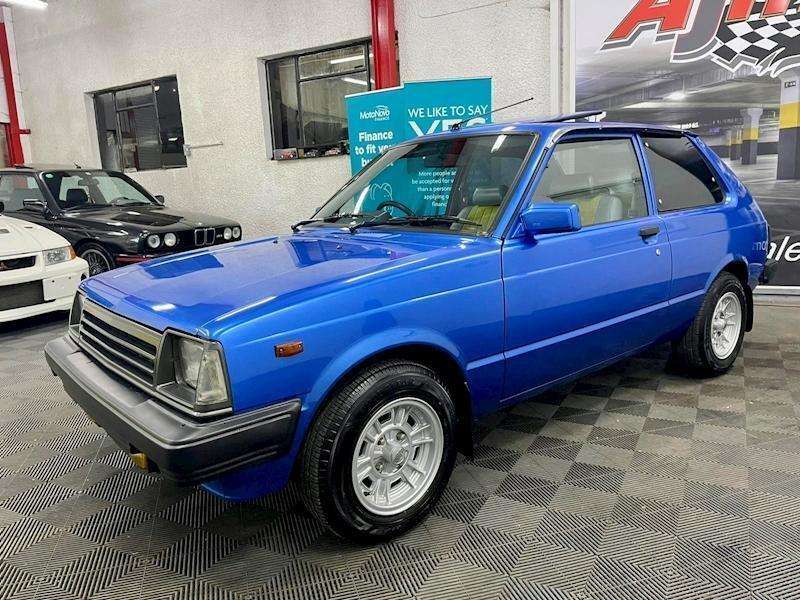
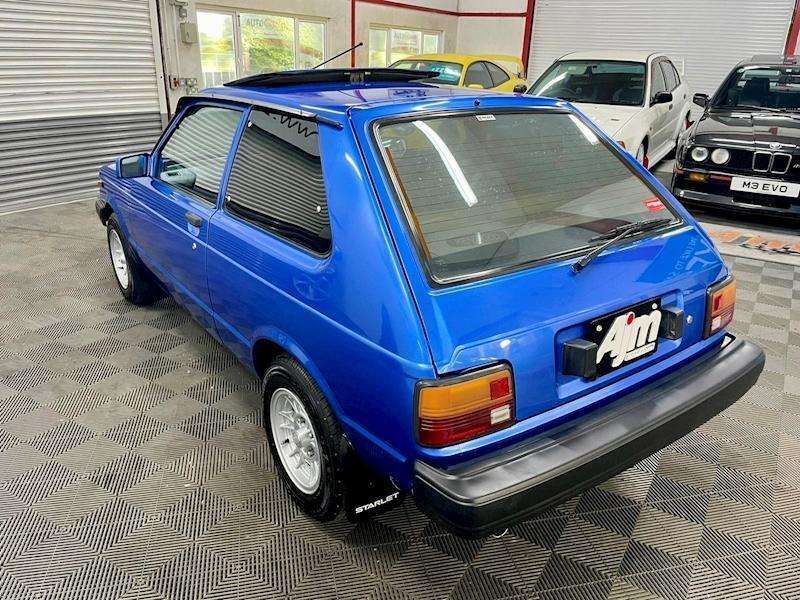
The 1983 KP61 1.3S pictured here
The car originally featured on this page was advertised as a 1983 Japanese-market 1.3S with approximately 115,000 miles. Its seller highlighted clean chassis legs and sills, a factory steel tilt sunroof and later electric windows. Those claims related to that individual sale and are not a substitute for inspecting the car or a current example.
Frequently asked questions
Is the Toyota Starlet KP61 rear-wheel drive?
Yes. The second-generation KP60-series retained rear-wheel drive; the following Starlet generation moved to front-wheel drive.
What engine is in a KP61?
KP61 denotes the 1,290cc Toyota 4K-series four-cylinder engine, although many cars have since been modified or engine-swapped.
What is the biggest buying risk?
Rust and old modifications. A structurally sound, correctly identified shell is usually more valuable than an impressive engine fitted to a poor body.
Explore more rare Japanese cars
Continue through our Rare & Forgotten Cars guides and the Nissan Micra K10 history and buying guide.