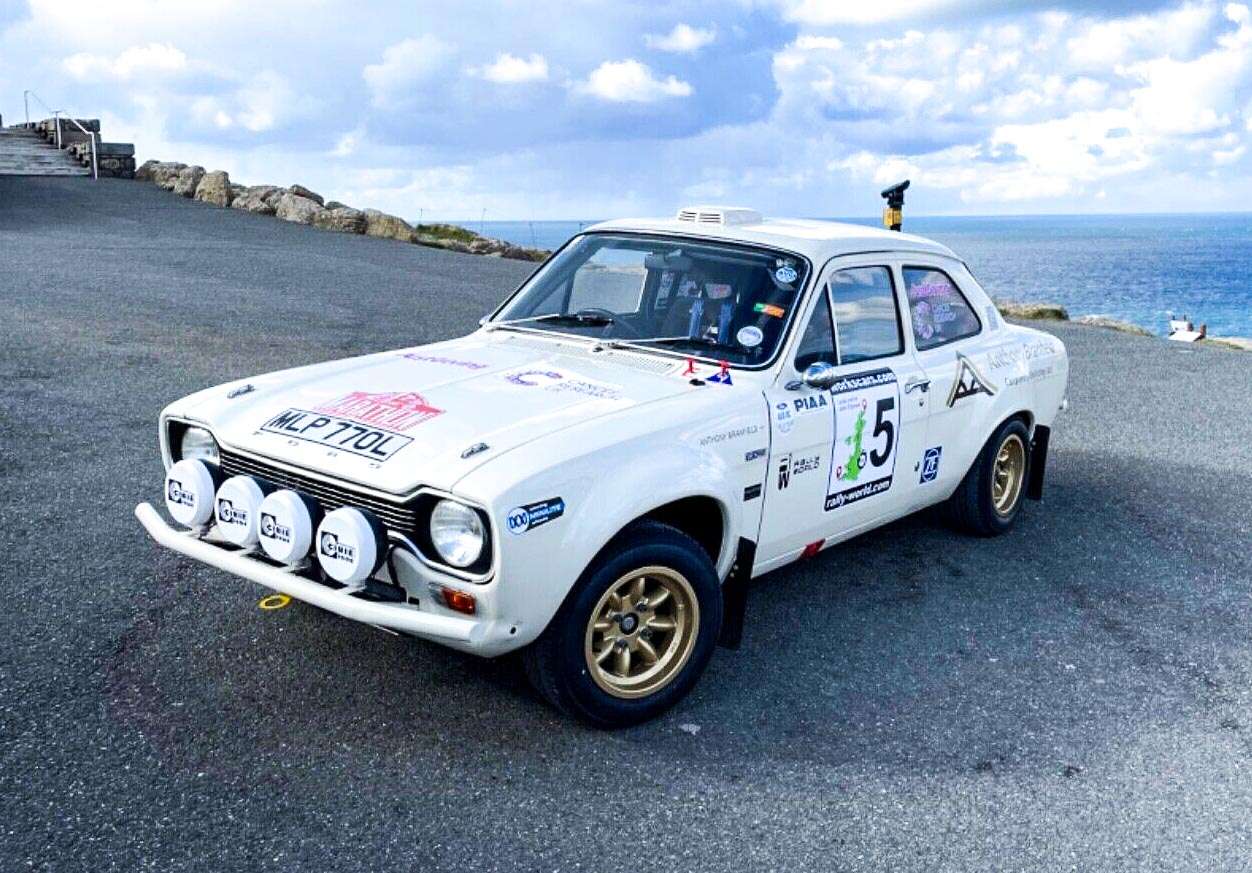
The Ford Escort RS1600 was the car that turned two famous initials into a performance dynasty. It combined the light, rear-wheel-drive Mk1 Escort with Cosworth’s advanced BDA engine and Ford’s new Advanced Vehicle Operations factory. The result was a road car built with competition in its blood—and the starting point for many of the Escorts that dominated rallying and touring-car racing.
Ford Escort RS1600 at a glance
| Introduced | 1970 |
|---|---|
| Engine | 1,601cc Cosworth BDA inline-four |
| Valve gear | Twin overhead camshafts, 16 valves, belt driven |
| Road-car output | Approximately 115 PS in original specification |
| Drive | Rear-wheel drive |
| Specialist production | Ford Advanced Vehicle Operations, Aveley, Essex |
| FIA homologation | No. 1605, dated 2 October 1970 |
| Why it matters | The first production Ford to wear the RS badge and the foundation of the Escort RS bloodline |
From Escort Twin Cam to RS1600
Ford already knew that the compact Escort made a formidable competition car. The Escort Twin Cam had paired the new body with the Lotus-developed twin-cam engine, but motorsport was moving quickly and Ford wanted a more modern, more adaptable power unit. The RS1600 arrived in 1970 as its successor and brought together several strands of Ford’s competition programme: the Escort shell, specialist engineering from Cosworth and a dedicated low-volume production operation.
The name was important. RS stood for Rallye Sport, and the RS1600 helped establish it as a promise that a Ford had been developed with serious competition intent. Later Escorts would make those letters famous, but the production story begins here.

The Cosworth BDA engine
The RS1600’s defining feature was its Cosworth BDA. The initials mean Belt Drive, A Series: a 16-valve, twin-cam aluminium cylinder head driven by a toothed belt and fitted to a strengthened version of Ford’s familiar Kent cylinder block. In road-going 1,601cc form Ford quoted roughly 115 PS, enough for lively performance in a light Escort and a top speed in the region of 180 km/h.
Its real brilliance was development potential. The BDA family could be enlarged, tuned and adapted for different racing and rallying classes. Competition derivatives progressed far beyond the road car’s output, while larger-capacity versions helped turn works Escorts into some of the most successful rally cars of the 1970s. The engine was not merely a showroom talking point; it was the basis of a programme.
Built at Ford Advanced Vehicle Operations
The RS1600 was associated with Ford’s Advanced Vehicle Operations—AVO—at Aveley in Essex. Established to build specialised performance cars away from the pace and compromises of mass production, AVO became the spiritual home of early fast Escorts. Cars could receive the stronger shell, specialist mechanical components and careful assembly required for a model intended to serve both demanding road drivers and competition customers.
That AVO connection now matters enormously. A genuine RS1600 is much more than a standard Mk1 fitted with a desirable engine, and surviving cars deserve careful identification through their shell details, numbers and continuous documentary history. Decades of rally rebuilding, modification and reshelling mean that provenance can be as important as appearance.
Love cars you don’t see every day?
Get forgotten cars, surprising motoring stories and the most interesting finds from Unusual Cars by email.
Free to join. No spam. Unsubscribe whenever you like. See our privacy policy.
A road car shaped by homologation
The FIA’s historic database records the Escort RS1600 under homologation number 1605, effective from 2 October 1970. Homologation was the bridge between the showroom and international competition: Ford had to establish a recognised production model before the Escort could be developed within the rules of its class.
This explains why the RS1600 feels different from a conventional sporting trim level. Its purpose was not simply to create a faster Escort for the road. It provided the approved base from which Ford and private teams could build increasingly specialised machines, using competition suspension, transmissions, brakes, body modifications and ever more powerful versions of the BDA.
Why the Mk1 Escort worked so well in competition
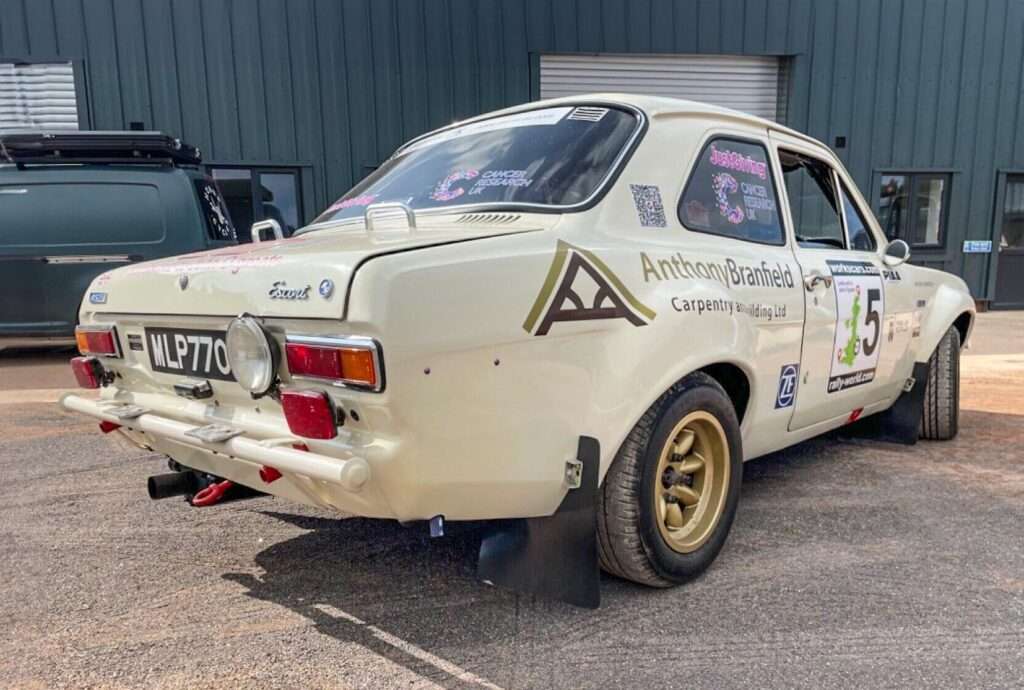
The Escort’s strength was not one exotic component but an unusually effective combination. It was compact, light and mechanically straightforward. Front-engine, rear-wheel-drive balance made it controllable on loose surfaces, while the shell accommodated extensive development. Ford also supported the car with the parts, engineering knowledge and competition organisation needed to turn potential into results.
In works and private hands, BDA-powered Escorts became fixtures in international rallying, circuit racing and national competition. Specifications varied enormously: a road RS1600, a period Group 2 racing Escort and a later works rally car may share ancestry without sharing the same engine capacity or state of tune. That distinction is important when reading modern adverts, because “RS1600 specification” can describe a wide range of historically inspired builds.
The RS1600 on the road
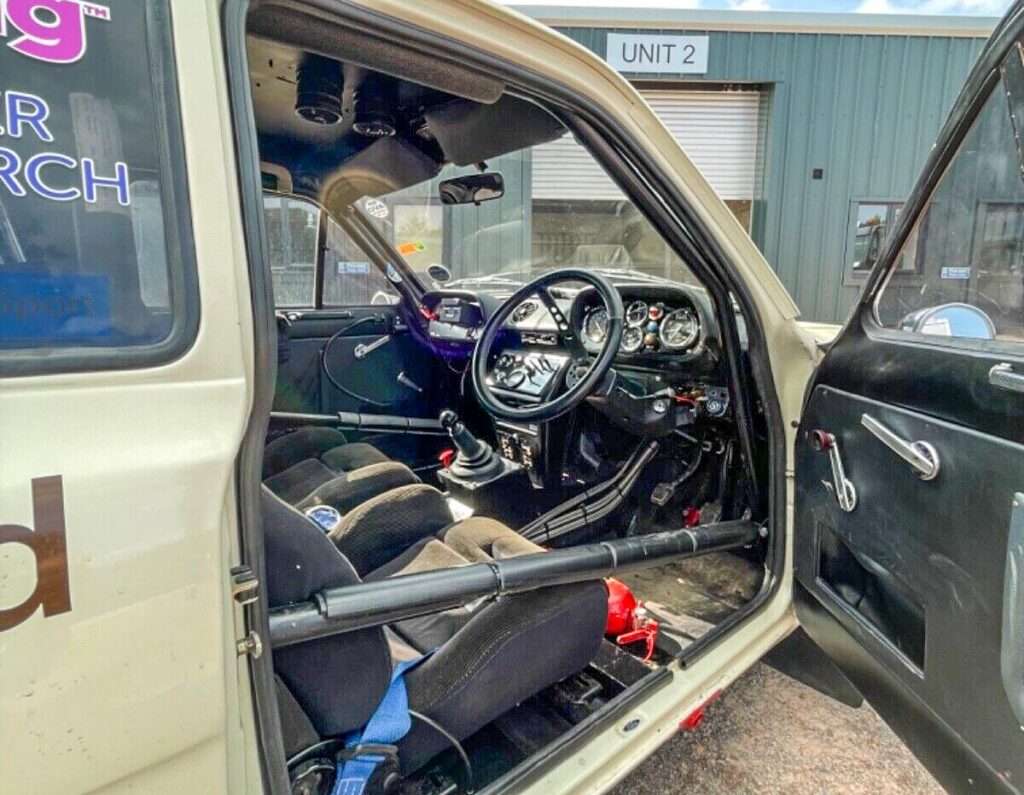
In standard form the RS1600 was less theatrical than many modern performance cars. Its cabin remained recognisably Escort, its body was clean and compact, and the engine’s road tune was usable rather than wild. Yet the BDA’s willingness to rev, the car’s modest weight and direct controls gave it a purpose ordinary Escorts could not imitate.
That relative understatement is part of its appeal. The RS1600 does not rely on huge spoilers or luxury equipment to announce itself. Its significance sits beneath the surface: specialist construction, sophisticated cylinder-head design and a direct relationship with Ford’s competition ambitions.
From RS1600 to RS1800—and a lasting legacy
The RS1600 established the template that Ford would refine through the Escort RS family. Enlarged and evolved BDA derivatives powered later competition cars, while the Mk2 Escort RS1800 carried the homologation story forward. Road-going RS models also broadened, ranging from the more accessible Mexico and RS2000 to turbocharged and four-wheel-drive performance Fords decades later.
Its legacy is therefore bigger than its production total or standard performance figures. The RS1600 demonstrated how effectively Ford could connect an affordable family-car platform to top-level motorsport. It gave the RS badge credibility, provided tuners with one of the era’s great engines and helped make the Escort a permanent part of rally culture.
What makes a genuine RS1600 significant today?
Originality is unusually complicated. Many cars were converted for motorsport when new, repaired after accidents, reshelled or repeatedly upgraded. Others began life as ordinary Escorts and were later built to RS or historic-rally specification. A beautifully prepared replica can be an excellent competition car, but it is not the same historical object as a documented AVO-built RS1600.
For historians and collectors, the most persuasive cars combine correct identity details with period records and a traceable chain of ownership. For enthusiasts who simply want the driving experience, a well-engineered recreation may make more sense. The important point is clarity: understand whether a car is an original RS1600, a period competition derivative or a later build, and describe it honestly.
Ford Escort RS1600 FAQ
What does BDA stand for?
BDA means Belt Drive, A Series. It describes Cosworth’s belt-driven, twin-cam 16-valve cylinder head design developed around Ford’s Kent-based engine architecture.
Was the RS1600 the first Ford RS road car?
It is widely recognised as the first production Ford to carry the RS badge, introduced in 1970 and assembled through Ford Advanced Vehicle Operations.
Did every competition Mk1 Escort use a 1.6-litre engine?
No. The homologated road base was 1,601cc, but competition BDA-family engines appeared in different capacities and specifications as development progressed and regulations changed.
Is an RS1600 the same as an Escort Mexico?
No. Both are important AVO-era Mk1 Escorts, but the Mexico used a simpler pushrod Kent engine while the RS1600 received the more sophisticated Cosworth BDA.
Continue the Ford story
Explore the complete Rare & Performance Fords hub, discover the more accessible Mk1 and Mk2 Escort Mexico story, or jump forward to the front-wheel-drive Escort RS1600i.
Research note: Production history and original road specifications were checked against Ford heritage material. Homologation number, capacity and date were checked against the FIA Historic Database and its period homologation form. Individual cars can differ substantially after decades of competition and restoration.