Forgotten performance cars
The Vauxhall Cavalier Turbo 4×4 is the proper sleeper of the early 1990s: a sober four-door family saloon with a turbocharged 2.0-litre 16-valve engine, six-speed manual gearbox and four-wheel drive. It is now rare enough that buying the right car matters far more than chasing the cheapest one.

What is the Vauxhall Cavalier Turbo 4×4?
Launched late in the Mk3 Cavalier’s life, the Turbo 4×4 took the sensible-looking Cavalier and gave it the 1,998cc C20LET turbo engine, a six-speed F28 manual gearbox and four-wheel drive. It was sold from 1992 to 1995 and shared much of its mechanical thinking with the contemporary Calibra Turbo, while keeping the practicality of a conventional four-door saloon.
That contrast is why the car remains interesting. The bodywork is restrained, but the mechanical package was serious for its era. It is not simply a GSi with a turbo badge: the correct engine, gearbox and four-wheel-drive hardware are fundamental to its identity and should be checked before a purchase.
Vauxhall Cavalier Turbo 4×4 specification
| Engine | 1,998cc C20LET turbocharged 16-valve four-cylinder |
|---|---|
| Power | 204bhp (150kW) at 5,600rpm |
| Torque | 280Nm at 2,400rpm |
| Transmission | F28 six-speed manual |
| Drive | Four-wheel drive |
| Production period | 1992–1995 |
Those figures explain the appeal, but they do not tell the whole story. The turbocharged engine gives the Cavalier strong mid-range performance and the gearbox has a very different character from an ordinary front-wheel-drive Cavalier. A well-sorted example should feel purposeful rather than merely quick in a straight line.

Why the C20LET matters
The C20LET is the heart of the car. It is a turbocharged development of Vauxhall/Opel’s 2.0-litre 16-valve family and has long attracted tuners, which makes originality especially important. Sensible maintenance and sympathetic upgrades are not automatically a problem, but a buyer should establish exactly what has been changed, who carried out the work and whether there is supporting paperwork.
On inspection, look for a clean cold start, stable idle, convincing oil-pressure history and evidence that the cooling system has been cared for. Ask when the timing belt and associated components were last replaced, and do not treat an enthusiastic verbal account as a substitute for invoices. Smoke, persistent overheating, rough running or unexplained boost behaviour deserve a specialist assessment before money changes hands.
Four-wheel drive, F28 gearbox and tyres
This is the expensive part to get wrong. The F28 six-speed gearbox and four-wheel-drive system are central to the Cavalier Turbo’s value, so a road test should include gentle and full-throttle acceleration, low-speed manoeuvring and repeated gear changes once the drivetrain is warm. Listen for abnormal noises, feel for reluctance or crunching, and make sure the car does not behave as though it is binding or fighting itself.
Tyres are not an afterthought on a four-wheel-drive Cavalier. The Turbo owners’ club specifically warns owners to pay attention to tyre condition and even wear. Ideally, the car should be on a correctly matched set, with sizes and rolling circumference kept consistent. Mismatched, badly worn or random-budget tyres are a reason to investigate further, not a small bargaining point.
Rust and bodywork checks
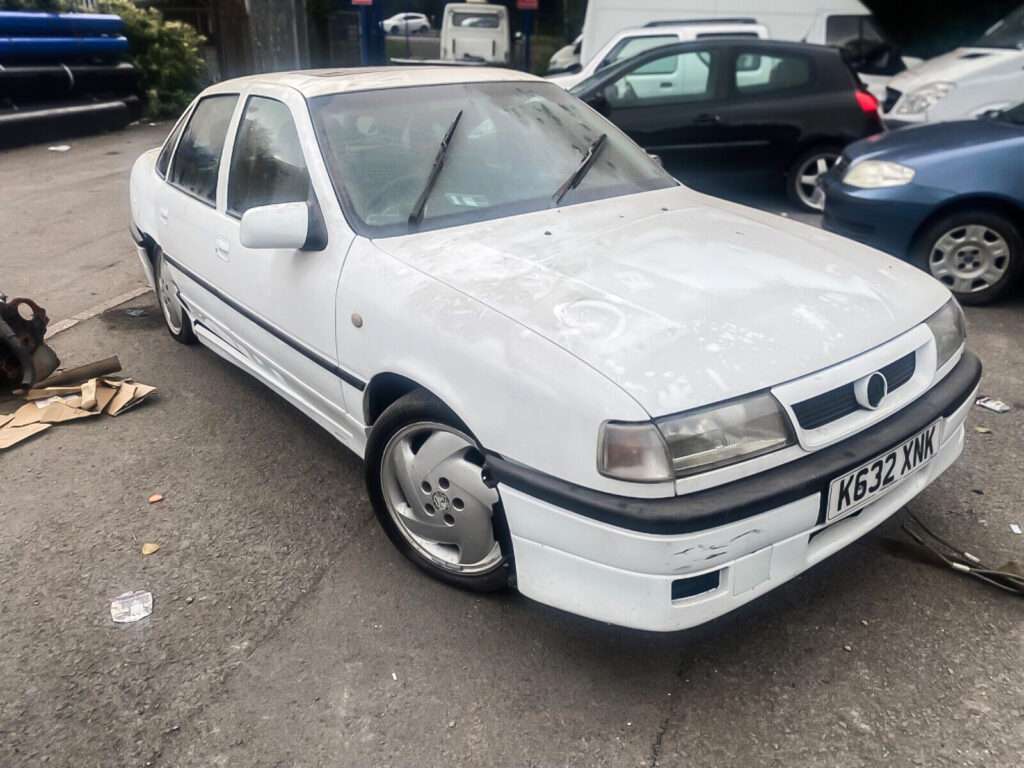
A smart paint finish can conceal a great deal. Inspect the sills and jacking points, wheel arches, floors, front chassis areas, inner wings, bulkhead area and boot floor carefully. Check panel gaps and paint texture for signs of historic accident repair, then look beneath the car rather than relying on photographs. Water ingress, neglected sunroof drains and tired seals can create problems that are not obvious during a short viewing.
Because surviving Turbo 4x4s are uncommon, a structurally sound car with poor cosmetics can be the better buy. Conversely, a shiny car with compromised structure or missing four-wheel-drive parts can become a very expensive restoration.
Originality and identification
Confirm that the VIN, logbook and vehicle identity agree, and that the engine, F28 gearbox and four-wheel-drive components are appropriate to a Turbo 4×4. Factory-style trim, bumper treatment, wheels and interior details add confidence, but the mechanical package and body shell matter first. Modified examples should be priced and judged as modified cars, not as originals with a few enhancements.
The Cavalier Turbo Owners Club estimates that about 2,240 Turbo 4x4s were built, with a little over 1,000 reaching the UK. Treat such figures as useful enthusiast context rather than a reason to buy a poor car simply because it is rare.
What to check on a test drive
- Start it from cold and watch for smoke, warning lights and unstable idle.
- Work through every gear in the F28 once warm; six-speed operation should feel deliberate, not obstructive.
- Check for vibration, drivetrain noise, binding or a reluctance to take power cleanly.
- Inspect the tyres for matching size, make, age and even wear.
- Test brakes, steering, suspension and every electrical function.
- Read the paperwork: servicing, belt history, modifications, previous MOT advisories and four-wheel-drive work all matter.
Is the Cavalier Turbo 4×4 a good modern classic?
Yes—if you want a genuinely unusual 1990s performance car and are prepared to buy carefully. It is practical, understated and mechanically distinctive, but it is not a cheap ordinary Cavalier with a larger engine. The best ownership experience comes from preserving a good one, using knowledgeable specialists where needed and avoiding shortcuts with drivetrain, tyres or corrosion repair.
Love cars you don’t see every day?
Get forgotten cars, surprising motoring stories and the most interesting finds from Unusual Cars by email.
Free to join. No spam. Unsubscribe whenever you like. See our Privacy Policy.
Related Unusual Cars guides
Explore the Rare & Performance Vauxhalls hub for connected guides to the Lotus Carlton, Cavalier Turbo, Calibra Turbo and Nova.
Explore more overlooked performance cars in our Forgotten 1980s Performance Cars hub, including the Ford Sierra XR4i and BMW E30 M3.
Frequently asked questions
How many Vauxhall Cavalier Turbo 4x4s were made?
The Cavalier Turbo Owners Club estimates production at around 2,240 cars between 1992 and 1995, with just over 1,000 supplied to the UK.
What engine does the Cavalier Turbo 4×4 use?
It uses the 1,998cc C20LET turbocharged 16-valve engine, paired with an F28 six-speed manual gearbox and four-wheel drive.
What is the most important buying check?
There is no single check: inspect the body shell, confirm the car’s identity and assess the engine, gearbox, four-wheel-drive system and tyres together. A specialist inspection is sensible for a serious purchase.